


How to Choose a Dodge Charger Rear Diffuser
Quick Summary
To choose a Dodge Charger rear diffuser, first confirm whether your car is a standard body or a 2020 to 2023 widebody, since the two need different parts. Then match your exact year and trim, pick standard or Stealth style, and check the material and finish. Test-fit and check your crossmember and mufflers before tightening anything.
- Confirm standard body or widebody first, since widebody diffusers will not fit standard cars.
- Match your exact year and trim to the product fitment notes before adding to cart.
- Check whether your rear differential crossmember is threaded or unthreaded before installing.
- Black powder coat takes 14 to 21 business days, while standard diffusers take 7 to 10.
Table of Contents
- Why a Rear Diffuser Is Worth Getting Right on Your Charger
- Standard Body or Widebody: Find Your Charger's Platform First
- Dodge Charger Rear Diffuser Fitment by Year and Trim
- Standard Versus Stealth: Choosing the Right Style
- Dodge Charger Rear Diffuser Materials and Finish Options
- Dodge Charger Rear Diffuser with Light: What to Know
- Dodge Charger Rear Diffuser Installation Requirements and Steps
- Realistic Performance Expectations and Common Mistakes
- Booking Your Charger Diffuser Order at Merrick Motorsports
- Frequently Asked Questions
Pop the hood on a rear diffuser and you'll find it's a lot like buying a set of tires: the wrong pick looks fine in the photo and then makes your life miserable in the garage. Let's make sure you're shopping for the right Charger part the first time, so you're not stuck with a very expensive piece of plastic that doesn't line up.
At Merrick Motorsports, we build our Charger diffusers in-house, and buyers often get tripped up by the same few details. Work through them in order and you'll land on the right part.
Why a Rear Diffuser Is Worth Getting Right on Your Charger
A rear diffuser is one of the few upgrades that changes how your Charger looks from behind and how air leaves the underside of the car. Get the fit wrong and you're left with gaps, misaligned fins, or a piece that rubs against your exhaust.
Because the stakes are a few hundred dollars and a Saturday afternoon, slow down before you click "buy." The sections below walk through the decisions in the order they matter most.
Standard Body or Widebody: Find Your Charger's Platform First
Before you look at a single style, confirm which body your Charger has. This one decision eliminates most of the wrong parts.
- Standard body: The 2015 to 2023 RT and SXT setups use the standard body diffuser.
- Widebody: The 2020 to 2023 widebody models need the widebody diffuser. It will not fit a standard body car.
Check the bumper shape and fender flares before you order. A widebody's flared fenders are obvious once you know to look for them. If you're not sure, check your vehicle details and reach out to the team before you buy. Guessing here is the most expensive mistake on this list.
Dodge Charger Rear Diffuser Fitment by Year and Trim
Fitment is where most people get burned, so match your car to the product listing exactly. Here's how our current options break down.
Standard RT and SXT diffuser (2015 to 2023):
- 2015 to 2018 SXT, GT, and R/T
- 2019 to 2023 SXT
Stealth diffuser (SRT, Hellcat, Scat Pack, Daytona, and 2019+ R/T and GT):
- 2015 to 2023 SRT, Hellcat, Daytona, and Scat Pack
- 2019 to 2023 R/T or GT
Widebody diffusers (2020 to 2023, all widebody models):
- Standard widebody diffuser and Widebody Stealth diffuser
The standard diffuser will not fit SRT or Hellcat bodies, and the Stealth is not made for the standard RT, SXT, or 2018 and older cars. If your trim sits on the edge of a range, read the fitment notes on the product page before you add to cart. Shop the full range here: Charger 15-23 Standard Diffuser for RT and SXT owners, Charger 15-23 Stealth Diffuser for SRT and Hellcat builds. Owners who want a closer look at the fitment charts for their specific trim can also visit the Quick Release Front License Plate Bracket for 2015 2019 Dodge Charger SE SXT R/T GT and the Quick Release Front License Plate Bracket for 2015 2019 Dodge Charger SRT 392 Scat Pack Hellcat pages for matching accessories.
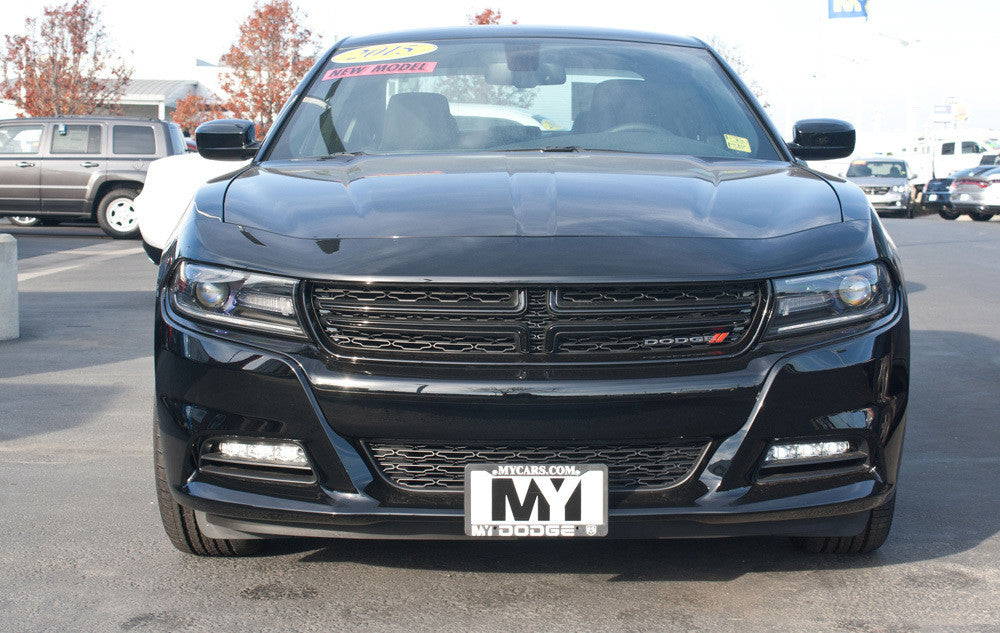
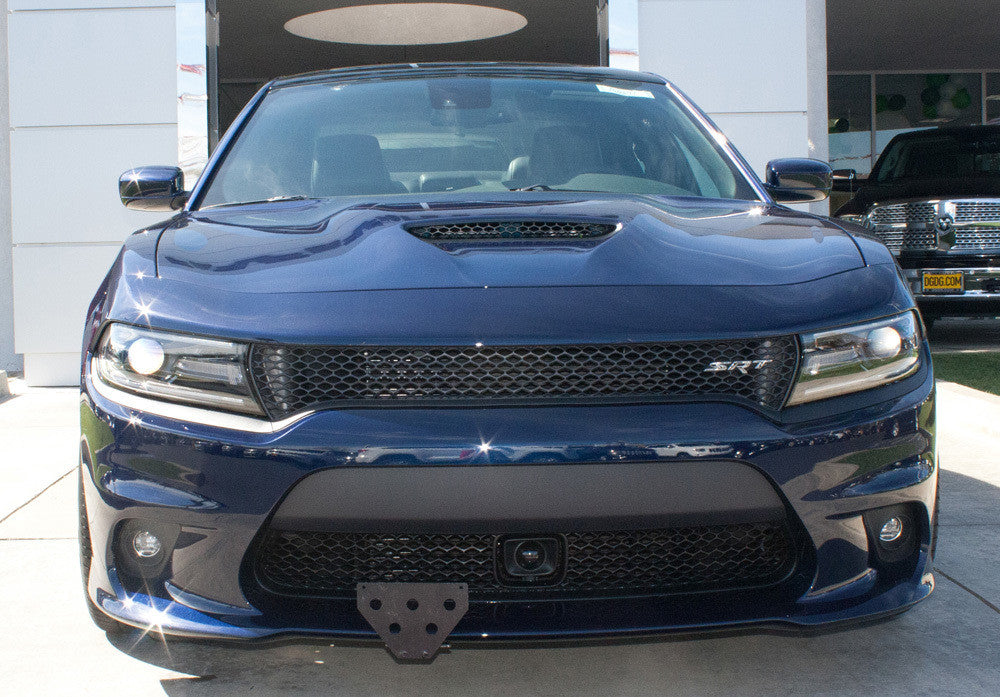
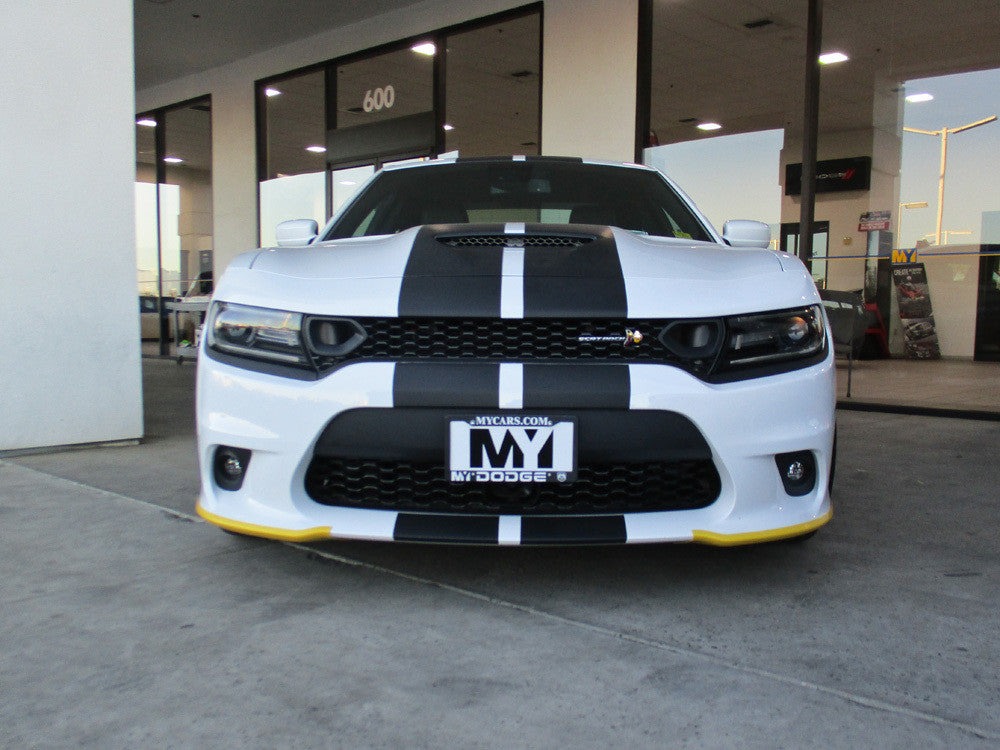
One more fitment check: a 2019 Charger SRT 392, Scat Pack, Hellcat GT, or Daytona has its own bracket match, so check the 2019 Dodge Charger SRT 392 Scatpack Hellcat GT and Daytona bracket before you assume the year alone tells you what fits.
Standard Versus Stealth: Choosing the Right Style
Once fitment narrows the field, style is the fun part. The standard design has a bolder, more visible profile with fins, while the Stealth keeps things cleaner and lower-key.
Think about what you want the car to say. A Charger with aggressive fins and a bold silhouette looks ready for the strip. A Stealth build blends into a more understated, menacing look. Neither is wrong. Just decide before you order so you aren't second-guessing it on the driveway.
Stealth diffusers ship in more pieces, with rear extensions and a disassembled center fin section, so plan for a slightly more involved install.
Dodge Charger Rear Diffuser Materials and Finish Options
Here's the part where a lot of shoppers glaze over and just buy the shiniest photo. Don't be that guy. The material under your bumper decides how the part survives a parking block, a pothole, and ten summers of sun. Most listings won't spell this out, so here's the garage-floor version.
ABS plastic. The most common aftermarket choice. It's rigid, holds a molded shape well, and takes paint or a textured finish nicely. The trade-off is brittleness: a hard hit on a cold day can crack it rather than flex. If you live where winter is a real season, treat ABS with respect.
Polyurethane. Flexible and impact-tolerant. It bends and recovers, which makes it forgiving on lowered cars and steep driveways. It's heavier and can be trickier to get a crisp, sharp-edged look out of, and cheap poly parts sometimes arrive with wavy surfaces. Because polyurethane can arrive with wavy surfaces, checking performance parts order accuracy alongside the finish helps ensure the diffuser matches what you selected.
Fiberglass. Light, stiff, and the go-to for show-car shapes and one-off builds. It's also the least forgiving: a curb strike can spider the gel coat or punch a hole, and repairs mean sanding and refinishing. Great for a garage-kept car, less great for a daily that sees real roads.
Metal (aluminum and steel). Strong and durable, and aluminum won't rust the way steel can. The catch is weight and cost, plus the fact that a metal pan can transmit road noise and needs proper mounting to avoid rattles. It's the choice when you want the part to outlast the car.
Our build. Our diffusers use a main body of HDPE plastic with 14-gauge aluminum for the attachment plate.
Finish comes in two options:
- Standard: HDPE diffuser and fins with a raw aluminum attachment plate. The plate sits under the car, so it doesn't show when the car is on the ground. It does have fine manufacturing marks.
- Black powder coat: HDPE diffuser and fins with a black powder-coated attachment plate for a more finished look.
Build times differ. Standard diffusers take 7 to 10 business days to build and prep for shipment, while the black powder coat takes 14 to 21 business days. Plan around that if you're trying to get the car back on the road by a certain date.
Watch out: A raw aluminum plate will show fine scratches and manufacturing marks. If you care about what's visible from a low angle, the powder coat is the easier long-term answer.
When you're comparing listings, read the material line the same way you'd read a tire's load rating. It tells you how the part will behave when the road fights back. Browse the Charger 15-23 Standard Diffuser and Charger 15-23 Stealth Diffuser to see the build details up close.
Dodge Charger Rear Diffuser with Light: What to Know
The diffuser listings in this article do not describe a built-in light, so check the product details before you buy if a lit rear diffuser is what you want.
Dodge Charger Rear Diffuser Installation Requirements and Steps
Here's what to expect before you pick up a wrench. The good news: the diffusers are designed to bolt up to the factory valance as an add-on. The better news: knowing the handful of things that can go sideways means you finish before the game starts instead of after.
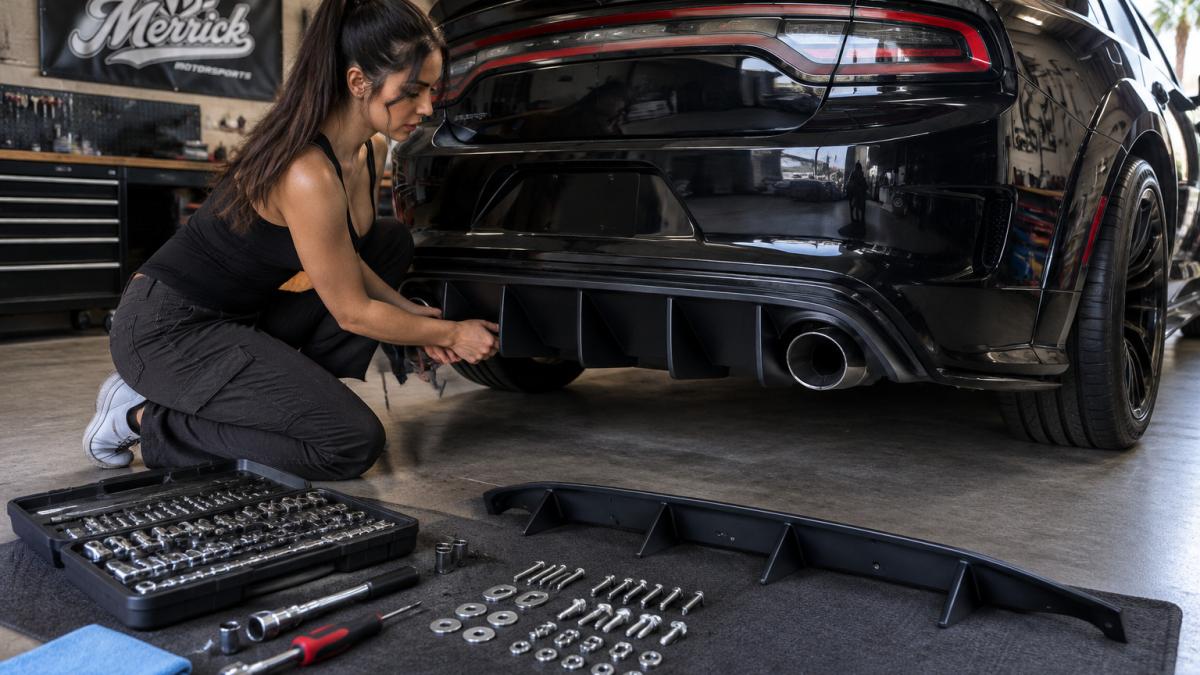
Step 1: Check your rear differential crossmember. The hardware ships to work with either a threaded or unthreaded rear differential crossmember. If yours is unthreaded, you'll need a Rivnut tool to set the nuts the bolts thread into. Find out before you start, not halfway through the install.
Step 2: Look at your mufflers. Depending on your mufflers, you may need to trim the aluminum pan to fit. Make sure your muffler doesn't hang below the factory rear fascia/valance.
Step 3: Test-fit before you tighten. Line the diffuser up against the valance, check the gaps on both sides, and confirm the fins sit level. Snug the hardware only after everything looks right.
Tools and hardware checklist:
- A socket set and torque wrench
- A Rivnut tool, if your crossmember is unthreaded
- The hardware kit that ships with your diffuser
- A helper for lining up the diffuser against the valance
- A trim tool or cutoff wheel if your mufflers require pan trimming
- Jack stands or ramps so you can work safely underneath
Watch out: Discovering an unthreaded differential mid-install is a frustrating way to spend a weekend. Check it first, buy or borrow the Rivnut tool, and you'll sail through.
Stealth diffusers ship in more pieces, with rear extensions and a disassembled center fin section, so plan for a slightly more involved install than the standard design. If you want to see the parts laid out before you commit, the Charger 15-23 Stealth Diffuser page shows the components, and the Charger 15-23 Standard Diffuser page covers the simpler build.
Realistic Performance Expectations and Common Mistakes
A diffuser is designed to diffuse air from the differential toward the rear of the vehicle. It's not a magic wand, though. Don't expect a dramatic change in grip or top speed from the diffuser alone. Treat it as part of a complete plan rather than a single fix.
The mistakes we see most often:
- Ordering by look alone. A diffuser that looks right can still be the wrong body or trim.
- Skipping the crossmember check. Discovering an unthreaded differential mid-install is a frustrating way to spend a weekend.
- Ignoring the muffler. Aftermarket exhaust is the most common reason a Stealth extension won't sit right.
- Forgetting the build time. Black powder coat takes longer, so order early for a fixed deadline.
Know what your car needs before you click buy, and most of these problems never happen.
Booking Your Charger Diffuser Order at Merrick Motorsports
Once you know your body style, trim, finish, and mufflers, the rest is simple. Pick your diffuser, double-check the fitment notes, and order. Owners who want to start with the right platform can browse the Charger 15-23 Standard Diffuser or the Charger 15-23 Stealth Diffuser.
At Merrick Motorsports, we're a small, family-owned business built around passion for cars, trucks, and performance. Pick the diffuser that fits your Charger, follow the install steps, and you'll be turning heads from behind. Just don't tell the neighbors it took you a full weekend. That's our secret.
Dodge official Charger performance specifications
Dodge Charger owner's manual and vehicle specifications
NHTSA vehicle safety and recall information
Frequently Asked Questions
Does a rear diffuser make a difference on a Dodge Charger?
A rear diffuser mainly changes how the rear underbody looks and how air leaves the back of the car. The Merrick Motorsports diffusers are designed to diffuse air from the rear differential toward the back of the vehicle, which is their functional purpose. Confirm your trim and body style before ordering so the part fits and does the job it was built for.
How do I check whether a rear diffuser fits my Charger's model year and trim?
Start by identifying your body style. Standard-body Chargers from 2015 to 2023 RT and SXT use the Charger 15-23 Standard Diffuser, which is listed for 15-18 SXT, GT, and R/T and 19-23 SXT. Widebody models from 2020 to 2023 need the Charger 20-23 Widebody diffuser, which will not fit standard bodies. SRT, Hellcat, Scat Pack, and Daytona bodies need the Stealth diffuser, which will not fit widebody or standard SXT models. Check your rear differential crossmember too, since threaded and unthreaded versions need different hardware.
Should I choose a Dodge Charger rear diffuser with a light?
Merrick Motorsports' current Charger diffuser listings do not describe built-in lighting, so this article cannot confirm light integration for these products. If a light is a must-have for your build, check the product listing or contact the team before you order. Focus first on fitment and finish, since a diffuser that does not bolt up correctly is the bigger problem.
Can I install a Dodge Charger rear diffuser myself?
Yes, the diffusers are designed to bolt up to the factory valance as an add-on, so basic hand tools and patience can get the job done. Plan on checking your rear differential crossmember type first, and if it is unthreaded you will need a Rivnut tool to set the hardware nuts. Expect to trim the aluminum pan if your mufflers interfere. If the work feels beyond your comfort zone, a qualified shop can handle it.
