


How to Install a Throttle Controller on a RAM 1500
Last Updated: November 17, 2026
Quick Summary
A throttle controller sits between your gas pedal and the engine computer and adjusts how sharply your RAM 1500 responds to pedal input. To install one, disconnect the battery, unplug the factory pedal connector, plug the controller harness in between, mount the module, and reconnect everything. It changes throttle response, not horsepower.
- A throttle controller changes throttle response, not engine horsepower.
- Confirm your exact model year and engine before ordering any controller.
- Disconnect the negative battery cable before touching any wiring.
- Take a photo of the pedal connector before unplugging anything.
- Start with the controller on a middle setting, then adjust sensitivity while driving.
Table of Contents
- Before You Start: What a Throttle Controller Actually Does
- Tools Needed for the Install
- RAM 1500 Throttle Controller Compatibility by Year
- Locating the Throttle Controller Accelerator Pedal Connector
- Step-by-Step Installation: Wiring, Mounting, and Display
- Setting Modes and Sensitivity
- How to Reset Electronic Throttle Control on a RAM 1500
- Pro-Tips from the Garage: Troubleshooting and Removal
- Your Next Move: Get the Install Done Right
- Frequently Asked Questions
Before You Start: What a Throttle Controller Actually Does
Alright, let's talk about the throttle controller on your RAM 1500. What does one of these things really do? A throttle controller sits between your gas pedal and the engine computer. It takes the signal from your foot and adjusts how sharply the truck responds to it. Think of it like turning the volume knob on a stereo, not like adding a new engine.
Your RAM 1500 uses drive-by-wire throttle control, which means there is no physical cable linking your pedal to the throttle body. The pedal sends an electronic signal, and the computer decides how far to open the throttle. That is why some trucks feel a little lazy off the line. The K&N Ford/GM/Dodge Throttle Control Module is built to change how that signal is read, so you can tune the sensitivity yourself.
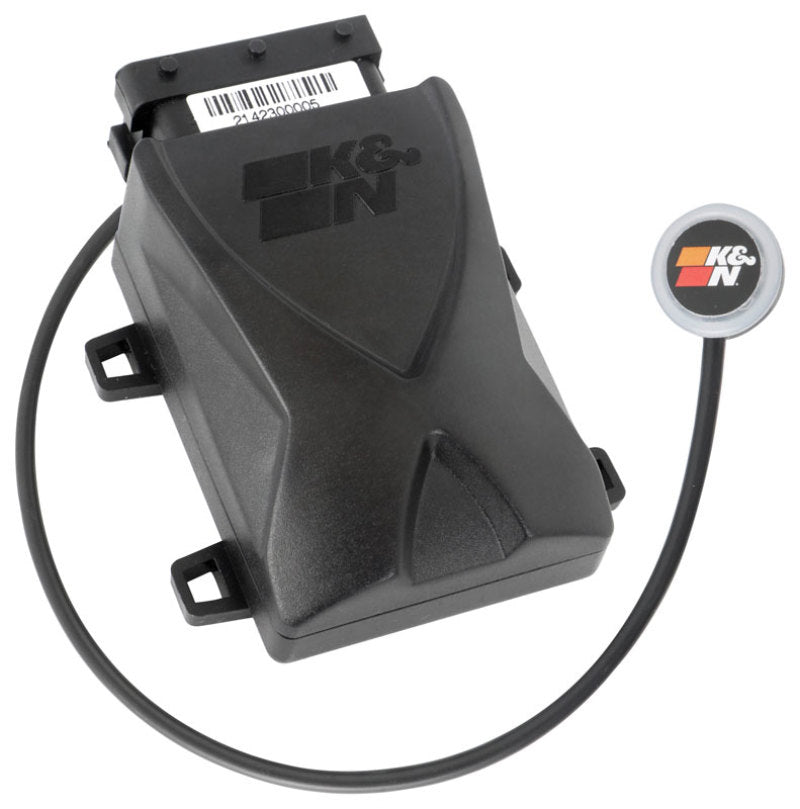
Here's the part that trips people up. A throttle controller changes how responsive the truck feels. It does not add horsepower. If you're hoping for more power numbers, you'll need different parts altogether. Keep that expectation in check and you'll be happy with the install.
Quick answer: A throttle controller adjusts the pedal signal so your truck responds faster or softer, depending on the setting you choose.
Tools Needed for the Install
Let's get your toolbox ready. Most installs of this type don't require anything fancy, but having the right tools on hand keeps the job from turning into a Saturday-afternoon nightmare. Here's what we recommend:
- Basic socket set and ratchet
- Trim removal tools (plastic pry tools, so you don't scratch the dash)
- Flashlight or work light
- Zip ties and a small roll of electrical tape
- A rag or shop towel for cleanup
- Your truck's owner's manual for fuse and connector locations
Keep a few extra zip ties around. You'll always need one more than you think.
RAM 1500 Throttle Controller Compatibility by Year
Before you order anything, confirm your truck's year, trim, cab style, and engine. The K&N Ford/GM/Dodge Throttle Control Module lists compatibility across a range of Ford, GM, and Dodge applications. The SpeedForm throttle controller from Raxiom also lists Dodge applications, so match the part to your exact build before you click buy.
Here's the garage-truth version: a part that says it fits does not always fit every build. Use this checklist before you order:
-
Model year: Confirm the controller listing explicitly names your year. A 2019 Classic and a 2019 new-body truck are not the same animal under the dash.
-
Existing modifications: If you already run a pedal commander-style device, a tuner, or an aftermarket pedal assembly, unplug it and return to stock before installing the new controller. Stacking two pedal devices is a recipe for a confused computer and a check engine light.
If you're not sure, check the product listing's fitment details before you order.
!Close-up of a RAM 1500 accelerator pedal connector with the release tab visible, work light shining under the dash
K&N throttle control module product page
Locating the Throttle Controller Accelerator Pedal Connector
Your accelerator pedal connector is where the controller plugs in. On most RAM 1500s, you'll find the pedal assembly up under the dash on the driver's side, near the steering column. Pop the lower trim panel with your plastic tools and look for a wiring harness with a release tab on the connector. For more ideas on upgrading the outside of your truck, check out DIY Ram truck exterior modifications.
Press the release tab, pull the connector straight apart, and keep the pieces where you can see them. Take a photo with your phone before you unplug anything.
Watch out: Don't yank the harness by the wires. Pull on the plastic housing only, or you can damage the pins and create a headache for yourself.
Step-by-Step Installation: Wiring, Mounting, and Display
!A pair of hands in a garage seating a plug-and-play connector under a RAM 1500 dash, with a work light and tools laid out on a rubber mat
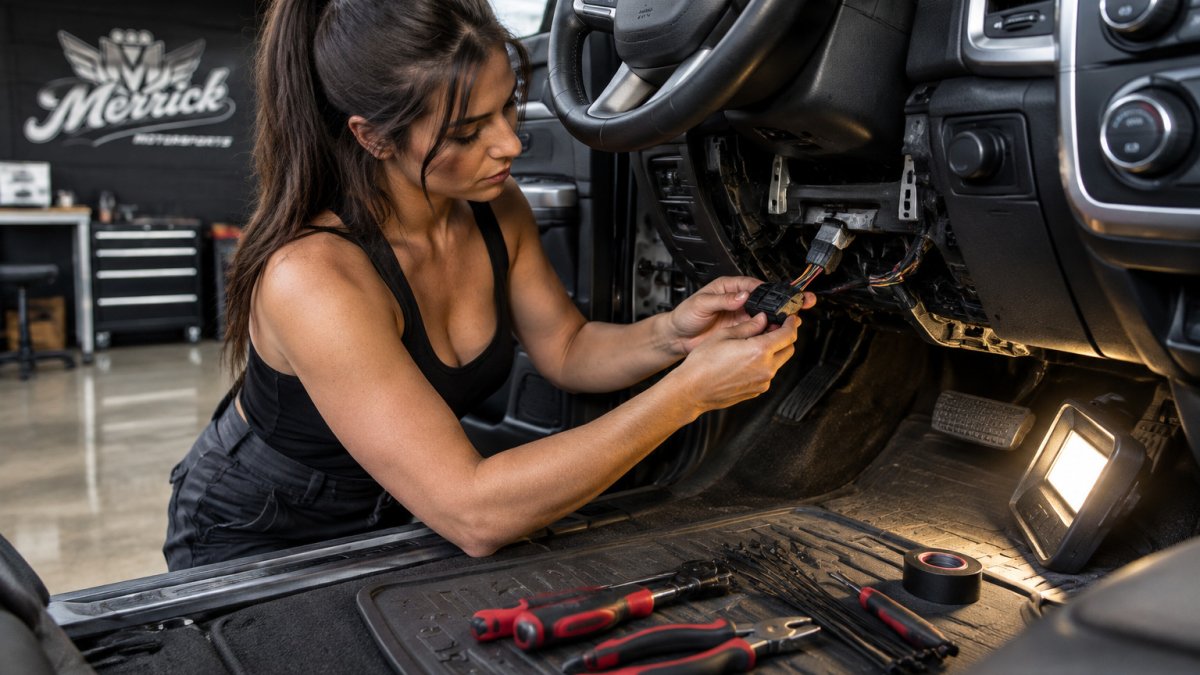
Now for the fun part. Follow these steps in order:
- Disconnect the battery. Disconnect the negative terminal and tuck the cable away from the post.
- Remove the lower dash trim. Use your trim tools to pop the panel loose, working from the edges.
- Unplug the factory pedal connector. Press the release tab and separate the two halves.
- Plug the controller harness in between. The module's harness is plug-and-play, so it connects to the factory pedal side on one end and the truck harness on the other.
- Mount the controller module. Use the included hardware and zip ties to secure it away from pedals, brake lines, and moving parts.
- Route the control dial. The aluminum dial mounts in the cab where you can reach it without looking down.
- Reconnect everything and test. Hook the battery back up and check that the dash lights and warning lights behave normally.
Take your time with the wiring. A snug connector and clean zip ties mean the install stays put on bumpy roads.
Pre-Install Safety: Battery and Ignition
Before you touch a single wire, disconnect the negative battery cable and let the truck sit for a few minutes. Keep the key out of the ignition while you work. Never work on wiring with the battery connected, because a short can blow fuses or damage the computer. Wear safety glasses, and keep your hands dry.
Here is a quick reference for the install sequence, so you can follow the job in order.
| Step | What to do | Time or frequency |
|---|---|---|
| 1. Disconnect battery | Remove negative terminal and tuck cable away | Before any wiring |
| 2. Remove lower dash trim | Pop panel loose with trim tools, edges first | Before unplugging |
| 3. Unplug factory pedal connector | Press release tab and separate halves | Photo first |
| 4. Plug in controller harness | Connect between factory pedal and truck harness | Plug-and-play |
| 5. Mount controller module | Secure away from pedals and brake lines | Included hardware and zip ties |
| 6. Route control dial | Mount in cab within easy reach | During mounting |
| 7. Reconnect and test | Reattach battery and check dash and warning lights | After reassembly |
Setting Modes and Sensitivity
Once the controller is in, you'll set how it responds. The K&N module is adjustable on the go, so you can dial in the sensitivity with the control knob. Start in the middle and drive around the block. If the truck feels too twitchy, back it off. If it still feels lazy, bump it up a notch.
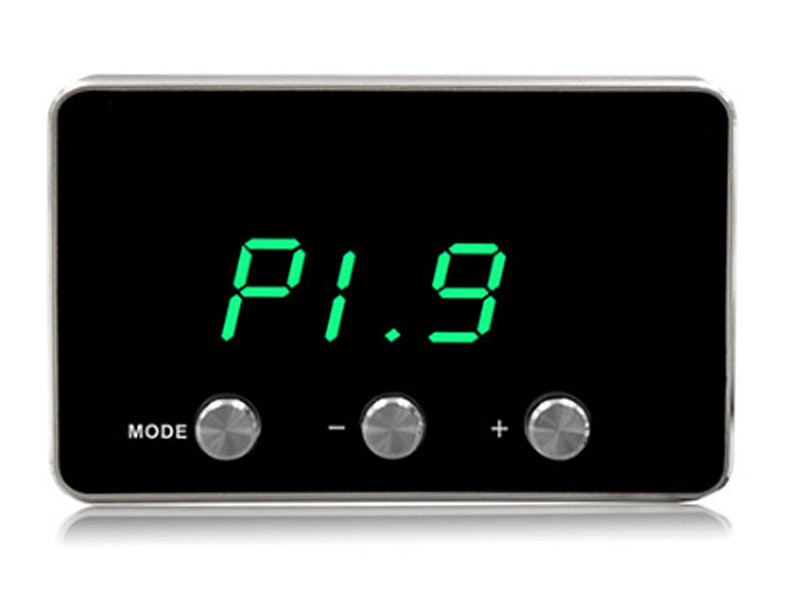
The Raxiom SpeedForm controller offers preset modes for Stock, Eco, Comfort/Sport, Sport, and Race, with nine sensitivity levels in each. Pick the mode that matches how you drive.
How to Reset Electronic Throttle Control on a RAM 1500
Sometimes the truck needs a reset after the install. If the throttle feels odd or a warning light stays on, disconnect the battery for about 10 minutes, then reconnect it. Start the truck, let it idle, and cycle the key once. This lets the computer relearn the pedal signal.
Check your connections first and make sure every plug seated fully.
Pro-Tips from the Garage: Troubleshooting and Removal
Here's where a little garage experience pays off. Most post-install problems fall into four buckets, and each one has a simple first check.
The controller won't power on. Start at the connector. Unplug the harness and look for a bent pin or a plug that didn't click. Then check the inline fuse if your kit has one, and confirm the ignition is in the run position when you test. If the dial lights up but the truck doesn't respond, the factory side of the harness may not be fully seated.
The connector won't seat. Look inside both halves for a stray piece of trim clip or a pushed-back pin. The release tab has to be fully depressed before the halves will mate. Don't force it. If it won't click, something is misaligned, and forcing it is how you turn a 20-minute job into a dealership visit.
Warning lights appear. A steady check engine light after install usually means the pedal connector isn't fully seated or the battery was reconnected before the harness was tight. Disconnect the negative cable, reseat every plug, reconnect, and let the truck idle for a few minutes. If the light persists, scan for codes before you do anything else.
Throttle behavior changes unexpectedly. If the truck feels twitchy, surging, or dead, drop the controller to its stock or lowest setting and test drive. A setting that's too aggressive for your driving style feels like a problem but is just a dial position. If stock mode still feels wrong, remove the controller and reconnect the factory harness to isolate whether the issue is the device or the truck.
Removal and return to stock. Reversing the install is the same job in reverse: disconnect the battery, unplug the controller harness, reconnect the factory pedal connector, remove the dial and module, and reinstall the lower dash trim. Keep the original packaging and hardware.
Warranty considerations. Read the product warranty terms before you start, and keep your receipts.
Remember, a throttle controller changes throttle response. It does not change how much power the engine makes. Be honest with yourself about that, and you'll enjoy the truck even more. Dad rule number three: if it ain't broke, don't fix it, but if you do fix it, keep the stock parts in a labeled box.
!Hands reconnecting a factory pedal harness under a RAM 1500 dash with trim tools and a flashlight nearby
SpeedForm throttle controller product page
Your Next Move: Get the Install Done Right
You've got the steps, the tools, and the know-how. Start with the K&N Ford/GM/Dodge Throttle Control Module if you want an adjustable, plug-and-play setup that installs in under 30 minutes, or browse the Raxiom SpeedForm controller if you like preset driving modes. Confirm your year and engine first, grab your flashlight, and take it slow. Your RAM will feel sharper behind the wheel, and you'll have the satisfaction of doing it right in your own garage.
Frequently Asked Questions
What is the best throttle controller for a Ram 1500?
The right choice depends on your truck's model year and how you drive. Merrick Motorsports carries the K&N Ford/GM/Dodge Throttle Control Module (20-1000) at $286.61, which is adjustable on the fly and includes the module, wiring harness, control dial, hardware, and instructions. The Raxiom SpeedForm Series Throttle Controller is priced at $101.61 and offers five preset modes with nine sensitivity levels each. Check the fitment listing for your exact year before you order.
Is it easy to install a throttle controller on a RAM 1500?
For most owners with basic hand tools, yes. K&N states its module can typically be installed in under 30 minutes with no software required. Both designs connect to the factory throttle pedal sensor with plug-and-play connectors, so you avoid permanent wiring changes. Take your time locating the connector and double-check each click before you close up the dash.
Will a throttle controller add horsepower to a RAM 1500?
A throttle controller changes how quickly the truck responds to your pedal input. It does not add engine power on its own. Product descriptions focus on sharper throttle response, not measured horsepower gains, so set realistic expectations. The difference is in drivability and how the truck feels when you merge or pass.
How do you test a throttle controller after installation?
Start with the key on and confirm the controller display powers up. Then start the engine and check for warning lights on the dash. Take the truck for a short drive at low speed, testing light throttle and a fuller pedal press. Step through the modes and sensitivity levels to confirm each one responds. If the truck runs rough or throws a code, disconnect the controller and recheck the connections.
