


Dodge Charger Carbon Fiber Hood Fitment: What Fits
Last Updated: November 3, 2026
Quick Summary
Carbon fiber hood fitment for the Dodge Charger depends on your exact model year and trim. The 2011-2014 Charger uses the Sniper 2.0 Carbon Fiber Hood, while the 2015-2023 Charger uses the Sniper 3.0 Hood, so match the listing's year range to your car before ordering. Confirm your engine and trim are called out, and plan on test-fitting before final installation.
- The 2011-2014 Charger fits the Sniper 2.0 Carbon Fiber Hood.
- The 2015-2023 Charger fits the Sniper 3.0 Hood.
- Check your model year on the door sticker or VIN before ordering.
- Adjust hinges first, then the latch, to fix gap issues.
- Recheck gaps after the first few drives, not just in the driveway.
Table of Contents
- Dodge Charger Carbon Fiber Hood Fitment at a Glance
- Model Year and Trim Compatibility: Which Charger Hood Fits Yours
- Hood Styles, Construction and What Carbon Fiber Really Means
- Fitment Checklist: Latch, Hinges, Gaps and Clearance
- Dodge Charger Hood Latch Adjustment for a Clean Close
- Carbon Fiber Hood Installation Tips From the Garage
- Carbon Fiber Hood Maintenance and Care for Long-Term Shine
- Booking Your Charger Hood Upgrade With Merrick Motorsports
- Frequently Asked Questions
Dodge Charger Carbon Fiber Hood Fitment at a Glance
Here's the short version, and it's better than a burnout on a cold morning: most carbon fiber hood fitment for the Dodge Charger works out for the model years they're designed for, but "fits" and "bolts on in twenty minutes with a cold drink" are two very different things. Merrick Motorsports carries carbon fiber hoods for the Dodge Charger, and the right one depends on your model year, your trim, and how much garage time you're willing to spend on alignment.
Fitment is the whole game here. A hood that sits a quarter-inch off, with uneven gaps and a latch that won't close cleanly, looks sad no matter how nice the weave is. So before you add anything to your cart, check the year range on the listing, confirm the construction type you want, and plan on test-fitting before final installation.
Think of this guide as the buddy who's already been under the hood. If your worry is keeping that carbon finish from lifting over time, our guide on preventing carbon fiber peeling covers the companion steps. We'll walk through compatibility by year and trim, explain what the different carbon fiber constructions really mean, cover a fitment checklist for latch, hinges, gaps and clearance, and finish with install and care tips. Let's get greasy.
Model Year and Trim Compatibility: Which Charger Hood Fits Yours
The first question every Charger owner asks is simple: does it fit my car? The answer depends on your generation, your trim, and sometimes whether your car rolled off the line before or after a mid-cycle change. The 2011-2014 Charger and the 2015-2023 Charger use different hood designs, so a hood listed for one should not be assumed to fit the other. No amount of dad-level optimism and a rubber mallet changes that.
Here's the fitment matrix we wish every listing had. Print it, tape it to the garage wall, and consult it before you click "add to cart."
| Model Years | Generation | Trims Called Out | Engines | Hood That Fits |
|---|---|---|---|---|
| 2011-2014 | LX | SE, SXT, R/T, SRT8, Pursuit | 3.6L, 5.7L, 6.4L | Sniper 2.0 Carbon Fiber Hood |
| 2015-2023 | LD | SXT, R/T, Scat Pack, SRT, Hellcat, Redeye | 3.6L, 5.7L, 6.2L, 6.4L | Sniper 3.0 Hood |
A few things that matrix doesn't shout loud enough:


- Check your exact model year, not just "Charger." The body changed between generations, and a hood built for one will not bolt to the other without a fight you will lose.
- Match the year range on the listing to your VIN or door sticker. The door sticker is the boring answer that saves you a return label and a week of waiting.
- Confirm your engine and trim are called out in the listing before you order.
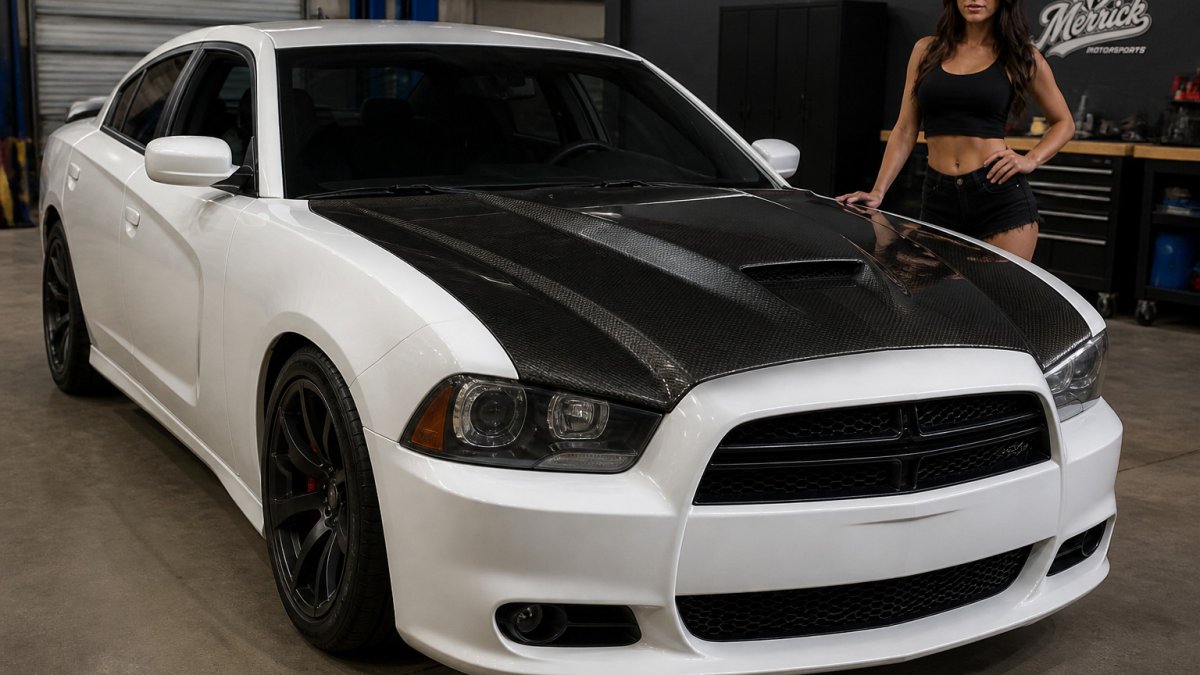
When in doubt, reach out with your VIN before ordering. A five-minute message beats a return label, a restocking headache, and the look your neighbor gives you when the hood is still in the box a month later. We've all been that neighbor.
Hood Styles, Construction and What Carbon Fiber Really Means
Not all carbon fiber is created equal, and that's not a line we just made up for the hype reel. The Sniper 2.0 is offered in three builds: fiberglass inner with fiberglass outer (which requires paint), carbon fiber outer over fiberglass inner, and full carbon fiber on both sides.
Carbon Fiber Outer With Fiberglass Inner
This build gives you a visible woven carbon outer surface over a fiberglass inner structure.
Full Carbon Fiber Construction
The Sniper 2.0 is also offered in full carbon fiber construction on both sides.
The Sniper 3.0 is offered in fiberglass-based and carbon configurations, so read the SKU notes in the listing before ordering.
Fitment Checklist: Latch, Hinges, Gaps and Clearance
This is where most aftermarket hood stories go sideways, so take this part seriously. Before you tighten a single bolt on your new hood, run through this checklist:
- Hinge alignment: Set the hood on the hinges loosely and check that it opens and closes without binding
- Latch engagement: Confirm the factory latch catches the hood's latch point squarely, with no rubbing
- Front gap: Measure the gap between the hood and the front fascia, aiming for even spacing side to side
- Side gaps: Check the fender-to-hood gaps on both sides; uneven gaps are the first thing a judge (or your neighbor) notices
- Clearance: Verify the hood clears the windshield cowl, wipers, and any headlight or intake hardware at full open and full closed positions
- Vent alignment: On vented designs, confirm the openings line up with the engine bay and nothing interferes with the intake
Work through the list in order and make small adjustments at the hinges before touching the latch. Chasing gaps with the latch alone usually just makes the latch unhappy.
Watch out: a hood that feels "close enough" on the first test fit can still be off by enough to rub the paint once you drive over bumps. Recheck the gaps after the first few drives, not just in the driveway.
2011-2014 Dodge Charger Sniper 2.0 Carbon Fiber Hood →
Dodge Charger Hood Latch Adjustment for a Clean Close
A properly adjusted latch is what makes a hood sit flush and stay put at highway speed. Here's the general process for getting a clean close:
- Open the hood and loosen the hood bumpers or latch bolts just enough to let the hood move slightly.
- Close the hood gently and watch where it sits relative to the fenders and fascia.
- Adjust the hood's height and angle at the hinge bolts until the gaps match on both sides.
- Tighten the latch and the hinge hardware once everything lines up.
- Close the hood with a firm press and confirm the latch engages with a solid click.
Give yourself patience on this step. Most fitment headaches come down to a few millimeters of hinge adjustment, and it's worth taking your time to get them right.
Carbon Fiber Hood Installation Tips From the Garage
Installing a carbon fiber hood is generally a bolt-on job for someone comfortable with basic tools, and it rewards a slow, careful approach. Here's the structured version we'd give a buddy in the driveway, including what to have on hand, how long to plan for, and where the real safety traps hide.
Tools and Supplies to Stage Before You Start
- Socket set with the sizes for your hinge bolts and latch hardware
- Ratchet and extensions so you're not knuckle-busting the rear hinge bolts
- Torque wrench for the final snug-down
- Painter's tape to protect fender edges and mark hinge positions
- Blankets or a foam mat for a padded landing zone
- Microfiber towels for handling the finished surface
- A helper, this is a tool, not a suggestion
Step-by-Step Installation
- Work on a clean, padded surface. Lay down blankets or a foam mat so the hood can't scratch on concrete or a tool tray. Carbon fiber shows every scuff, and a scuff on a fresh hood is a special kind of heartbreak.
- Get a helper. Hoods are awkward to lift solo, and dropping one onto the fender is the kind of mistake you only make once. Two sets of hands and zero heroics.
- Mark the factory hinge positions with painter's tape before you remove anything. This gives you a baseline to return to if the new hood fights you.
- Remove the factory hood and store the hardware in a labeled bag. You'll thank yourself when the new hood needs the original hinge bolts. A zip-top bag labeled "Charger hood bolts" beats a coffee can of mystery metal every time.
- Transfer the factory hinges and latch hardware to the new hood loosely. Snug, not torqued.
- Test-fit before final tightening. Set the hood on the hinges loosely, close it gently, and check gaps and latch engagement before you torque anything down.
- Adjust at the hinges first, then the latch. Small moves at the hinge bolts fix most gap issues. Chasing gaps with the latch alone usually just makes the latch unhappy.
- Torque the hardware evenly once everything lines up. Carbon and fiberglass don't like being overtightened, so snug bolts evenly rather than cranking one corner down.
How Long It Takes
Plan on a few hours for a first-timer, more if you're chasing perfect gaps. A second set of hands cuts the removal and lift time significantly. That's time well spent, because a clean fitment looks like it came from the factory, and that's the whole point.
Safety Precautions That Actually Matter
- Keep your hands clear of the hood edge when lowering it. Carbon fiber edges are not forgiving.
- Never work under a hood that isn't fully supported. A hood propped on a stick is not a plan. Use hood struts or a proper prop rod, and don't trust a broom handle.
- Lift with your legs, not your back. A hood is awkward more than it is heavy, and awkward is what tweaks backs.
- Wear eye protection when drilling or trimming if your install calls for it, because carbon dust is not confetti.
Watch out: a hood that feels "close enough" on the first test fit can still be off by enough to rub the paint once you drive over bumps. Recheck the gaps after the first few drives, not just in the driveway.
If your trim, vent layout, or clearance situation feels unusual, consider having a professional install it.
Carbon Fiber Hood Maintenance and Care for Long-Term Shine
Carbon fiber looks incredible when it's cared for and mediocre when it isn't. The good news is that maintenance is simple if you stay on top of it. Carbon fiber looks best with a regular care routine.
Start with a gentle wash. Wash in the shade, rinse thoroughly, and dry with a soft microfiber towel so you don't leave swirl marks. A gentle wash and wax that boosts gloss is a good match for this routine.
For protection between washes, a sealant helps keep the surface slick and resistant to environmental grime. A water-based graphene paint sealant provides longer-lasting protection for a carbon hood.
A few care rules we live by:
- Avoid abrasive polishes on the weave; use a finish designed for gloss enhancement
- Wipe off bug guts and bird droppings quickly, since they can etch the surface if left to bake in the sun
- Check the hood and fitment periodically for any loosening hardware after hard driving or rough roads
Booking Your Charger Hood Upgrade With Merrick Motorsports
You've done the homework, checked the year range, picked your construction, and mapped out the fitment steps. The last piece is getting the right hood on the right car. Start with the model year listing that matches your Charger, confirm the construction you want, and reach out with questions before you order if anything about your trim or setup feels unclear.
Ready to make that Charger's nose look as mean as it sounds? Browse the Sniper 2.0 for the 2011-2014 Charger or the Sniper 3.0 for the 2015-2023 Charger, and get that hood on the car.
Frequently Asked Questions
Is a carbon fiber hood legal for street use?
In most cases, a carbon fiber hood is legal for street use as long as it is securely latched and does not obstruct your view. Check your state's equipment rules, since some states regulate hood latch and hood pin requirements. A correct fitment and a working latch are the main things to confirm before you drive.
What is the typical weight savings of a carbon fiber hood?
Confirm the listed weight for the specific hood you order before you plan your build.
Do carbon fiber hoods require hood pins for safety?
Many enthusiasts add hood pins as a backup to the factory latch, especially with lighter aftermarket hoods or aggressive driving. Pins are not a substitute for a properly adjusted latch, but they add security if the latch ever fails. Always check that the hood closes flush and the latch engages fully before every drive.
