


The Ultimate Guide to American Made Dodge Performance Parts
Last Updated: October 26, 2026
Quick Summary
American made dodge performance parts are components engineered and manufactured domestically, and you verify them by asking for a country-of-origin label, a manufacturer address, and a part number tied to a real facility. Confirm your exact year, engine, and drivetrain before ordering any dodge performance parts.
- Designed here, assembled here, and manufactured here are three different claims, and only the last means domestic production.
- The FTC requires a made in USA product to be all or virtually all made here, with documentation to back it up.
- The all-wheel-drive Charger uses different front-end packaging than rear-drive cars, the most common fitment miss.
- BBK lists a 20-25 horsepower and torque increase for its 1-3/4-inch long-tube headers over stock shorty headers.
- Sequence your build airflow first, then exhaust, then fuel and ignition, then brakes and chassis.
Table of Contents
- Why American Made Dodge Performance Parts Matter for Your Build
- How to Verify Country of Origin Before You Buy
- Genuine, Factory-Backed, and Aftermarket Parts Explained
- Dodge Charger Aftermarket Parts: Bolt-Ons That Actually Fit
- Dodge Challenger Performance Parts for Street and Strip
- Mopar Performance Parts vs. the Aftermarket
- Hemi Performance Parts: Intake, Exhaust, and Airflow Upgrades
- Engine Internals and Rebuild Components for Big Power
- Ignition, Fuel System, and Supporting Mods
- Brake and Suspension Upgrades for Cars That Actually Stop
- Fitment Guide: Model-Year and Trim Compatibility
- Emissions Legality and Street-Use Requirements
- Pricing, Warranty, and Ownership Trade-Offs
- Building Your American-Made Power Package at Merrick Motorsports
- Frequently Asked Questions
Why American Made Dodge Performance Parts Matter for Your Build
Here's the uncomfortable truth about american made dodge performance parts: a big chunk of what gets sold under that banner never touched a domestic CNC machine.
A Dodge performance part is any component engineered to improve a Dodge vehicle's power, handling, braking, or durability beyond factory spec.
Why does it matter? Fitment. A part modeled on a real Charger or Challenger chassis in a domestic shop tends to bolt up the way the listing promises.
Below, we'll walk through how to verify origin, sort genuine from aftermarket, and build a power package that actually fits. The payoff is fewer return labels and more time in the driver's seat.
How to Verify Country of Origin Before You Buy
The fastest way to verify country of origin is to ask for documentation, not adjectives. "American-made" on a product page is marketing.
Here's the part most buyers skip: "made in the USA" is not one claim, it's three different claims wearing the same jacket.
- Designed here means the engineering and drawings happened domestically. The part can still be cast and machined overseas. This is the loosest claim and the one most likely to appear on a box.
- Assembled here means components from multiple countries were put together domestically. The fasteners might be imported, the housing might be imported, and the final bolt-together happened in a domestic shop.
- Manufactured here means the part was actually produced domestically, from raw material through finished component. This is the claim the keyword is really asking about, and it's the one that requires the most paperwork.
Start with the Federal Trade Commission's rules on "Made in USA" claims, which set a strict standard for what that phrase can legally mean. According to the FTC guidance on Made in USA claims, a product marketed as made in the USA must be all or virtually all made here, and companies must be able to back that up.
Then do four things:
- Call or email and ask which facility machines the part, not just which country the brand calls home
- Check whether the brand publishes a real address and warranty terms
- Cross-reference the part number against the manufacturer's own catalog
- Ask for the country-of-origin label or the documentation the brand uses to support its claim
A common mistake is trusting a marketplace listing photo. That photo is often a stock image of a different finish. Watch out: if a seller dodges the origin question twice, that's your answer.
One more mechanism worth knowing: ask whether the part carries a country-of-origin marking on the component itself, not just the packaging. Many manufacturers cast, stamp, or laser-etch origin information directly onto the part. If the only origin claim lives on a cardboard box that gets thrown away at install, you've learned something about the seller's confidence.
For a broader look at what's available across the aftermarket side, our best aftermarket parts for Dodge muscle guide covers the landscape in more detail.
Genuine, Factory-Backed, and Aftermarket Parts Explained
Genuine parts come from the automaker's own supply chain. Factory-backed parts are performance components sold through a manufacturer program, and Dodge's Direct Connection is the clearest example: Stellantis North America's announcement of Direct Connection describes it as Dodge's performance-parts portfolio, launched through Dodge Power Brokers dealers.
The distinction that matters for your build is warranty and fitment risk, not prestige. Genuine parts carry the least fitment risk and the most paperwork. Factory-backed parts split the difference.
One contrarian point worth hearing: aftermarket does not mean unregulated. SEMA notes that many aftermarket parts fall under National Highway Traffic Safety Administration oversight depending on safety needs, per SEMA's overview of federal aftermarket parts regulation. So "aftermarket" is a sourcing category, not a legal free-for-all.
For a broader look at what's available across the aftermarket side, our best aftermarket parts for Dodge muscle guide covers the landscape in more detail.
Dodge Charger Aftermarket Parts: Bolt-Ons That Actually Fit
Dodge Charger aftermarket parts are where fitment promises go to die. The Charger ran a long production span with trim and drivetrain variations, and a part that fits a rear-drive SRT doesn't necessarily fit an all-wheel-drive model.
The fix is boring and effective: match part numbers to your exact year, engine, and drivetrain before you click buy. Reputable listings state exclusions plainly.
A few bolt-on categories that deliver real value without opening the engine:
- Cold air intake systems for airflow and sound
- Cat-back or axle-back exhaust for tone and flow
- Strut tower braces for chassis rigidity
- Brake rotor and pad upgrades for stopping confidence
The one drawback to budget bolt-ons is that gains stack slowly. You're not adding a supercharger with a $200 purchase, and anyone promising that is selling you a story.
For a focused list that skips the fabrication headaches, our Dodge Charger bolt-on upgrades guide breaks down what fits what.
Dodge Challenger Performance Parts for Street and Strip
Dodge Challenger performance parts split into two honest camps: street parts that keep the car livable, and strip parts that trade comfort for elapsed time. Knowing which camp you're shopping in saves money and marriages.
Street builds usually start with airflow and exhaust, then move to suspension and brakes. Strip builds go after weight, traction, and launch consistency, which means drag-oriented wheels, tires, and supporting driveline work.
Here's what most guides miss: the Challenger's curb weight is the single biggest factor in how a part feels.
A common mistake is buying drag radials before sorting the rear suspension. Do it in the other order. You'll hook better and break less.
Mopar Performance Parts vs. the Aftermarket
Mopar performance parts win on integration. They're designed with the factory calibration and packaging in mind, and dealer-backed support is a genuine advantage when something goes sideways.
The aftermarket wins on ceiling. Independent manufacturers build for combinations the factory never offered, and they iterate faster when a community asks for something specific. That's how you get carbon fiber intakes and long-tube headers for applications the catalog doesn't cover.
So which do you pick? If you're staying near stock and want minimal risk, factory-backed is the sane call. If you're chasing a specific number or a specific look, the aftermarket is where that lives.
Hemi Performance Parts: Intake, Exhaust, and Airflow Upgrades
Hemi performance parts follow one rule: an engine is an air pump, and everything you bolt on either helps it breathe or chokes it. Intake, throttle body, heads, headers, and exhaust are one continuous path.
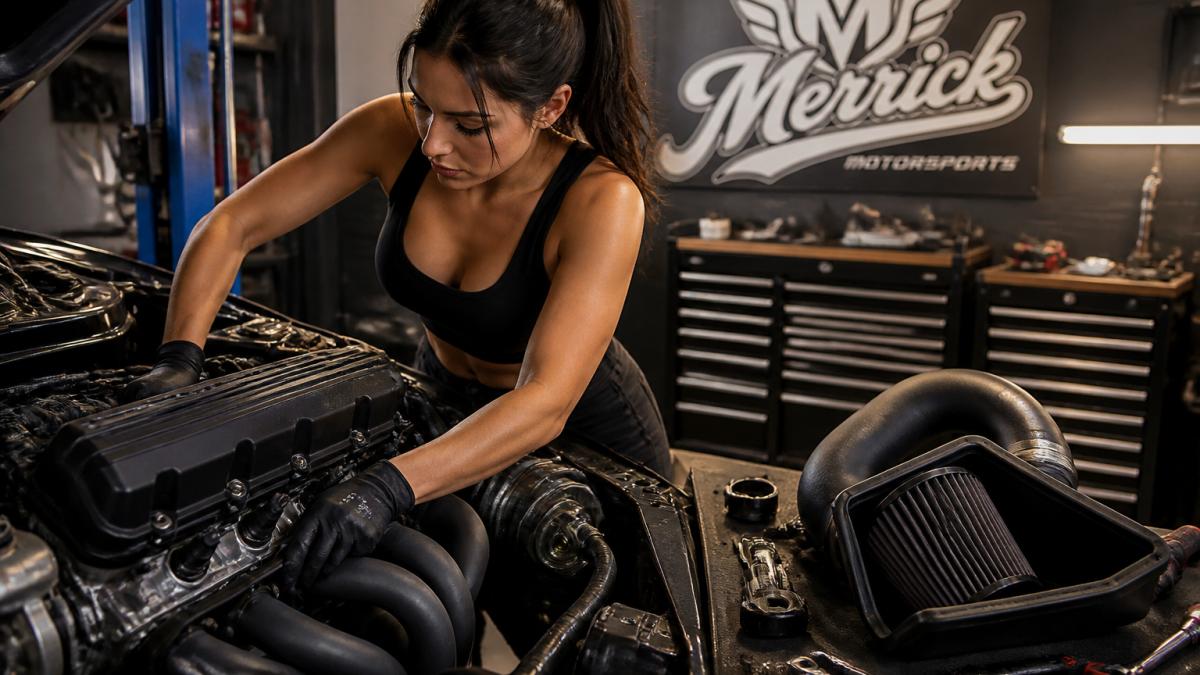
Start with intake. The aFe Momentum GT cold air intake system for the 2011-2023 Challenger uses a 10-inch radial flow filter with oil-free synthetic media and a one-piece cross-linked polyethylene housing, with a clear sight window so you can check filter condition without tearing the thing apart.

Then exhaust. Our BBK long tube headers for the 5.7 Hemi, 2009-2024 Charger and Challenger use 1-3/4-inch mandrel-bent 16-gauge primaries with 3/8-inch laser-cut flanges, and BBK lists a 20-25 horsepower and torque increase over stock shorty headers.

For the 6.1, 6.2, and 6.4 cars, the 1-7/8 full length headers in silver ceramic fit Charger, Challenger, Chrysler 300C, and Magnum SRT8 applications, with BBK listing a 20-plus horsepower gain. A titanium ceramic version is also available for 2006-2024 fitments.

Watch out: long tubes need the matching mid-pipe and, on many applications, O2 harness extensions. Skip those and you'll be staring at a check engine light wondering what you did to deserve it.
Engine Internals and Rebuild Components for Big Power
Engine internals are where the conversation stops being about sound and starts being about survival.
Forged internals exist for one reason: stock cast components have a ceiling. Add boost or rpm past that ceiling and something lets go.
Dodge Charger Challenger SRT8 6.1, 6.2, 6.4L Full Length Headers 1-7/8 Silver →
A crate engine is the shortcut. Instead of machining a block and assembling it yourself, you buy a complete, tested long block and bolt your accessories to it. Fewer variables, faster turnaround, higher upfront cost.
The thing nobody tells you about internals: the machine work matters as much as the parts. A set of premium forged pistons in a block with sloppy bore clearances is a waste of money.
Ignition, Fuel System, and Supporting Mods
Ignition and fuel components are the supporting cast that decides whether your airflow upgrades actually pay off. More air in means more fuel needed, and more fuel needs a spark that can light it reliably.
The short list of supporting mods that matter:
- Distributor and ignition components in good condition, or coil-on-plug upgrades where applicable
- Fuel pump capacity matched to your power goal
- Injector sizing that matches airflow, not guesswork
- A water pump and cooling system that survives the extra heat
A common mistake is upgrading the fuel pump and skipping the tuning. The pump delivers; the calibration decides. Without a proper tune, bigger injectors can make the car run worse than stock.
Valve covers and dress-up pieces fall in the same aisle, and there's no shame in it. A clean engine bay is part of the build. Just don't let cosmetic parts eat the budget you needed for the fuel system.
Brake and Suspension Upgrades for Cars That Actually Stop
Brake and suspension work is the least glamorous money you'll spend and the most important. A car that makes big power and can't stop or turn is a liability with a nice paint job.
Brake rotors and pads are the entry point. Slotted or drilled rotors paired with a quality pad compound change pedal feel and fade resistance noticeably. Stainless brake lines tighten up the pedal further.
On the chassis side, a strut tower brace ties the front shock towers together and reduces flex under load.
Suspension bushings, sway bars, and quality dampers round out the package. Do the bushings before the big sway bar. Worn bushings make a new bar feel like it did nothing.
Fitment Guide: Model-Year and Trim Compatibility
Fitment is the question we get asked more than any other, and the answer is always the same: year, model, engine, drivetrain. All four, every time. Miss one and you're guessing.
Most retailers stop there and hand you a checklist. That's not a fitment guide, that's a liability waiver with bullet points. So here's the model-by-model version the category pages leave out.
Charger and Challenger: the drivetrain trap
The Charger and Challenger share a platform family, which fools a lot of shoppers into assuming parts swap freely. They don't. The all-wheel-drive Charger variants use different front-end packaging than the rear-drive cars, and a strut tower brace or intake that clears a rear-drive SRT may not clear an AWD model.
Engine displacement matters just as much. A 5.7 Hemi and a 6.4 Hemi share a family name and not much else in the intake and header department. Hellcat applications add their own packaging constraints on top. If a listing says "fits Challenger" with no year range and no engine callout, treat it as unfinished homework.
Durango: the SUV that gets forgotten
The Durango shares powertrain options with the Charger and Challenger, which leads shoppers to assume the same parts bolt on. Airflow and exhaust components often do carry over by engine, but chassis and suspension parts are a different story because the Durango rides on its own body and suspension geometry. Confirm the part is listed for Durango specifically, not just for the engine it shares.
Ram: trucks are not cars with a bed
Ram applications follow the same discipline with an extra wrinkle: bed length, cab configuration, and ride height can all affect whether a suspension or exhaust component fits. A cat-back system designed for one cab and bed combination may not fit another. Check the listing's exclusions before you assume the truck in the photo is the truck in your driveway.
The pre-order checklist
- Confirm your exact model year, not just the generation
- Confirm engine displacement and whether it's a Hellcat application
- Confirm rear-wheel drive versus all-wheel drive
- Confirm cab, bed, and ride height on truck applications
- Confirm whether the part requires a matching mid-pipe or harness
- Confirm emissions status for your state
- Save the part number and the listing's fitment note
Dodge model-year and trim guidance is the gap most retailers gloss over. A listing that says "fits Challenger" without a year range is a listing that hasn't done its homework. Look for explicit ranges like 2008-2024 or 2009-2024, and read the exclusions.
If you're coming from a different platform, expect the same discipline to apply. Fitment is not a Dodge problem, it's a car problem.
Emissions Legality and Street-Use Requirements
Emissions legality is the part of the build nobody puts on Instagram. It's also the part that can turn a fun weekend project into a failed inspection.
The rule of thumb: parts that replace emissions-controlled components need to be legal for street use in your state, and California's CARB approval is the strictest benchmark. Some long-tube headers are explicitly not CARB approved and cannot be sold or shipped to California addresses.
Before you buy, ask three questions:
- Is this part legal for street use in my state?
- Does it require a tune that affects emissions equipment?
- Will it pass inspection, or is this track-only hardware?
A common mistake is assuming a part is street-legal because a retailer sells it. Retailers sell race parts all day. Legality is your responsibility, and the consequences land on your registration, not theirs.
Pricing, Warranty, and Ownership Trade-Offs
Pricing in this category tracks three things: material, machining, and support. A ceramic-coated long-tube header costs more than a bare steel shorty because the coating, the mandrel bending, and the flange machining all cost real money.
Here's how the trade-offs shake out across the common upgrade paths:
| Upgrade Path | Typical Price Range | Install Effort | Warranty Reality | Best For |
|---|---|---|---|---|
| Cold air intake | Around $500 | Low, bolt-on | Manufacturer-backed | First mod, daily driver |
| Long tube headers | $800-$850 | High, needs mid-pipe | Manufacturer-backed, emissions caveats | Real airflow gains |
| Strut tower brace | Budget-friendly | Low, bolt-on | Manufacturer-backed | Chassis rigidity |
| Brake rotors and pads | Varies by kit | Medium | Wear item, limited | Stopping confidence |
| Forged internals | Highest tier | Engine-out | Varies by builder | Boost and big power |
Warranty is where cheap parts show their true cost. A part with no stated warranty is a part the seller doesn't stand behind. Read the terms before you read the reviews.
Ownership trade-offs matter too. Long tubes change exhaust volume. Stiffer bushings change ride quality. Every upgrade takes something in exchange for what it gives.
Building Your American-Made Power Package at Merrick Motorsports
Building a power package is mostly about sequencing. Airflow first, then exhaust, then supporting fuel and ignition, then brakes and chassis to handle what you built. Do it in that order and each step builds on the last.
That's the approach we take at Merrick Motorsports. We stock over 30,000 aftermarket parts and ship from six locations across the country, with a catalog built around Mopar and performance vehicles. If you want to weigh us against the big-box option first, see our CARiD alternative for Dodge parts comparison.
Our advice: buy the part that fits your exact car, verify the origin claim, and don't skip the supporting mods. Your engine will thank you, and your knuckles will heal faster.
Frequently Asked Questions
What performance parts are available for Dodge vehicles?
Dodge owners have a deep catalog to pull from: cold air intakes, long tube headers, cat-back exhausts, ignition components, fuel system upgrades, brake rotors, suspension parts, and full engine internals like pistons and forged connecting rods. For Charger and Challenger builds, the most common bolt-ons are intake, exhaust, and a tune. Bigger builds move into camshafts, crate engines, and forced induction. Merrick Motorsports stocks over 30,000 aftermarket parts across Mopar platforms, so you can source everything from a shift knob to a full power package in one place.
How can I tell whether a Dodge performance part is made in the United States?
Start with the manufacturer's own documentation, not the product page headline. Look for a country-of-origin statement on the box, the spec sheet, or the brand's site. Under federal trade rules, origin claims have to be substantiated, so a legitimate maker will show you the paperwork. Ask the seller directly and get it in writing. If a listing only says 'American-made' with no supporting detail, treat it as marketing until proven otherwise. Merrick Motorsports backs its precision-engineered component claims with sourcing details on request.
What is the difference between Mopar parts and aftermarket parts?
Mopar parts are factory-backed components distributed through Dodge dealers, and Dodge's Direct Connection program is the performance-parts side of that portfolio. Aftermarket parts come from independent manufacturers and often push further on airflow, materials, and power gains than factory offerings. Neither is automatically better. Mopar gives you a known fit and dealer support. The aftermarket gives you options like 1-7/8 inch primary headers that add 20+ horsepower. Many builds mix both, and that is perfectly normal.
How do I check whether an aftermarket part fits my Dodge?
Match the part number against the seller's published fitment list, then confirm your exact year, trim, and drivetrain. A header that fits a 2009-2024 Charger 5.7L will not fit an AWD car, for example, and that note is usually buried in the fine print. Check whether the part needs a matching mid-pipe, O2 harness extensions, or a reducer to connect to your factory cat-back. When in doubt, call the seller with your VIN. Ten minutes on the phone beats a weekend with a drill.
Do aftermarket performance parts affect a Dodge vehicle's warranty?
They can, depending on the part and the failure. Under the Magnuson-Moss Warranty Act, a dealer cannot void your entire warranty just because you installed an aftermarket part. They have to show the part caused the failure. That said, a tune or a header swap can absolutely affect a claim on a related component. Keep your receipts, document the install, and ask your dealer how they treat bolt-ons before you buy. It is a boring conversation that saves an expensive one later.
Which upgrades should I consider first for a Dodge Challenger?
Start with airflow: a cold air intake and a cat-back or long tube header setup. Those two deliver the best seat-of-the-pants gain per dollar and set up everything that follows. A cold air intake like the aFe Momentum GT runs $504.53 and drops right in. Long tube headers add 20+ horsepower and a proper exhaust note for around $800 to $850. After that, look at a tune, then brakes and suspension so the car can handle what the engine is doing.
The hardest part of a Dodge build isn't turning wrenches. It's sorting through listings that promise the world and fit nothing. Merrick Motorsports exists to cut that noise: over 30,000 aftermarket parts, shipping from six locations across the US, and a catalog focused on Mopar and performance vehicles. Get started with Merrick Motorsports and build a Dodge that fits right the first time.
