


Dodge Challenger Hood Pins vs Hood Latches for Street Use
Last Updated: November 24, 2026
Quick Summary
Hood pins are a backup that catches the hood if the factory latch lets go, while the factory latch remains the primary system. Stock hoods on normal street driving usually need only the factory latch, but aftermarket carbon or lightweight hoods often benefit from pins added as secondary retention.
- The factory latch is a two-stage setup with a primary claw and a secondary catch.
- Lightweight hoods flex differently at speed, which can load the factory latch in new ways.
- Pins are a secondary retention system and do not replace a healthy primary latch.
- Confirm the kit's model-year range and check hood alignment before ordering or drilling.
- The Speedlogix kit is a complete bolt-on option for 2008-2023 Challengers.
Table of Contents
- Why Challenger Owners Argue About Hood Pins
- How the Factory Dodge Challenger Hood Latch Works
- Hood Pins vs Hood Latches: Side-by-Side Comparison
- AeroCatch Hood Latches for Dodge Challenger Owners
- Carbon Fiber and Aftermarket Hoods: Does Yours Need Pins?
- Dodge Challenger Aftermarket Hood Installation Checklist
- Merrick Motorsports Hood Pin Options Compared
- Picking Your Setup Before the Next Cruise Night
- Frequently Asked Questions
Every Challenger owner has had this argument at a cruise night, usually right after the third beer and before anybody's cooled off. Merrick Motorsports has heard it plenty too, and we think the honest answer is simpler than the forum threads make it look. Hood pins vs hood latches for street use is really a question about how your hood is built, how you drive, and how much you want to fiddle with your car on a Sunday.
Why Challenger Owners Argue About Hood Pins
Hood pins are the little billet posts that sit near the front edge of the hood and hold it down if the primary latch ever lets go. On a stock car the factory latch does the heavy lifting, and for most daily drivers that's the end of the story. The debate starts when somebody bolts on a lightweight aftermarket hood, and the stock latch suddenly looks like a question mark.
Some owners keep the original setup alone, while others swear by pins as cheap insurance. Both camps have a point, and that's exactly why this comes up every few weeks.
Our take: the argument gets louder when people mix up "looks cool" with "adds security." Pins can do both, but you should know which one you're buying.
How the Factory Dodge Challenger Hood Latch Works
The factory latch on a Challenger is a two-stage setup, and understanding both stages is the difference between a hood that stays shut and a hood that introduces itself to your windshield. The primary latch is the spring-loaded claw at the front center that grabs the striker bar when you drop the hood. The secondary catch is the smaller lever you have to release by hand before the hood will open all the way.
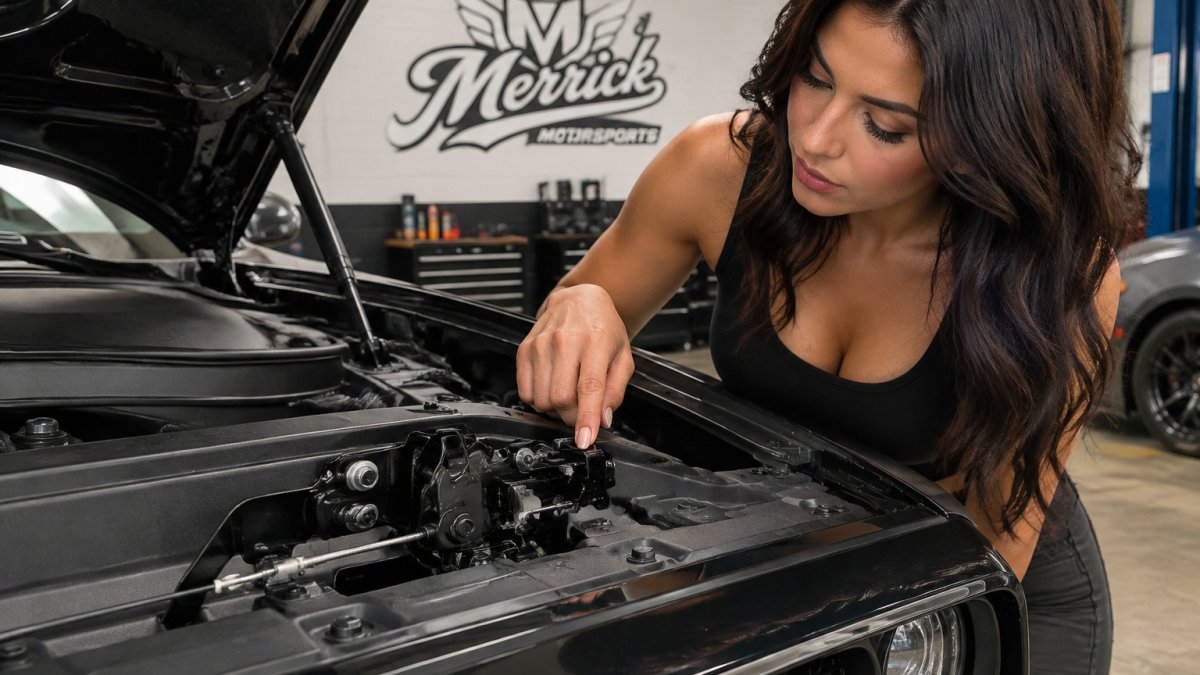
When the hood is the factory panel and the car is driven on the street at normal speeds, the latch does its job without drama. The factory setup holds up well when the striker is adjusted correctly and the latch is kept clean.
Where the conversation changes is when the hood changes. A fiberglass or carbon-fiber hood is lighter and flexes differently at speed, and that flex can load the latch in ways it wasn't designed for. The latch itself isn't broken, the car just no longer matches the setup it was built around. That's the honest reason pins come up in Challenger threads: not because the factory latch is weak, but because the hood bolted to it may no longer be the hood the latch was engineered for.
A common pattern is an owner who installs a lightweight hood, keeps the factory latch, and notices the hood moving at highway speed. That movement is the signal to think about secondary retention, not a signal that the latch failed. Keep the factory hardware in good shape, check the secondary catch engages every time, and treat any hood change as a reason to re-evaluate the whole retention system rather than just the latch.
Watch out: check striker engagement and secondary catch operation before you assume the factory setup is fine.
Hood Pins vs Hood Latches: Side-by-Side Comparison
Here's the short version of how the two approaches differ for street driving:
| Factor | Factory Latch Only | Factory Latch Plus Hood Pins | Aftermarket Latch (AeroCatch-style) |
|---|---|---|---|
| Security at speed | Good with stock hood | Adds a backup catch | Strong secondary hold |
| Installation effort | None | Bolt-on kit, some setups need drilling | Moderate, depends on kit |
| Appearance | Factory look | Billet visible at hood edge | Low-profile to visible |
| Daily usability | Easy | Easy once set | Easy, visual confirmation |
| Best for | Stock hood, normal driving | Aftermarket hood, extra backup | Carbon or lightweight hoods |
Security and Hood Retention at Speed
Retention is the reason you're reading this, so start here. Pins give you a physical backup that catches the hood if the main latch lets go.
A kit like the Speedlogix Hood Pin Kit is designed around that job. It's a bolt-on setup with billet bezels and stainless mounting plates, so you aren't guessing where to drill. The pins help secure the hood at high speed and during hard driving, which is the scenario most owners of lightweight hoods are worried about.
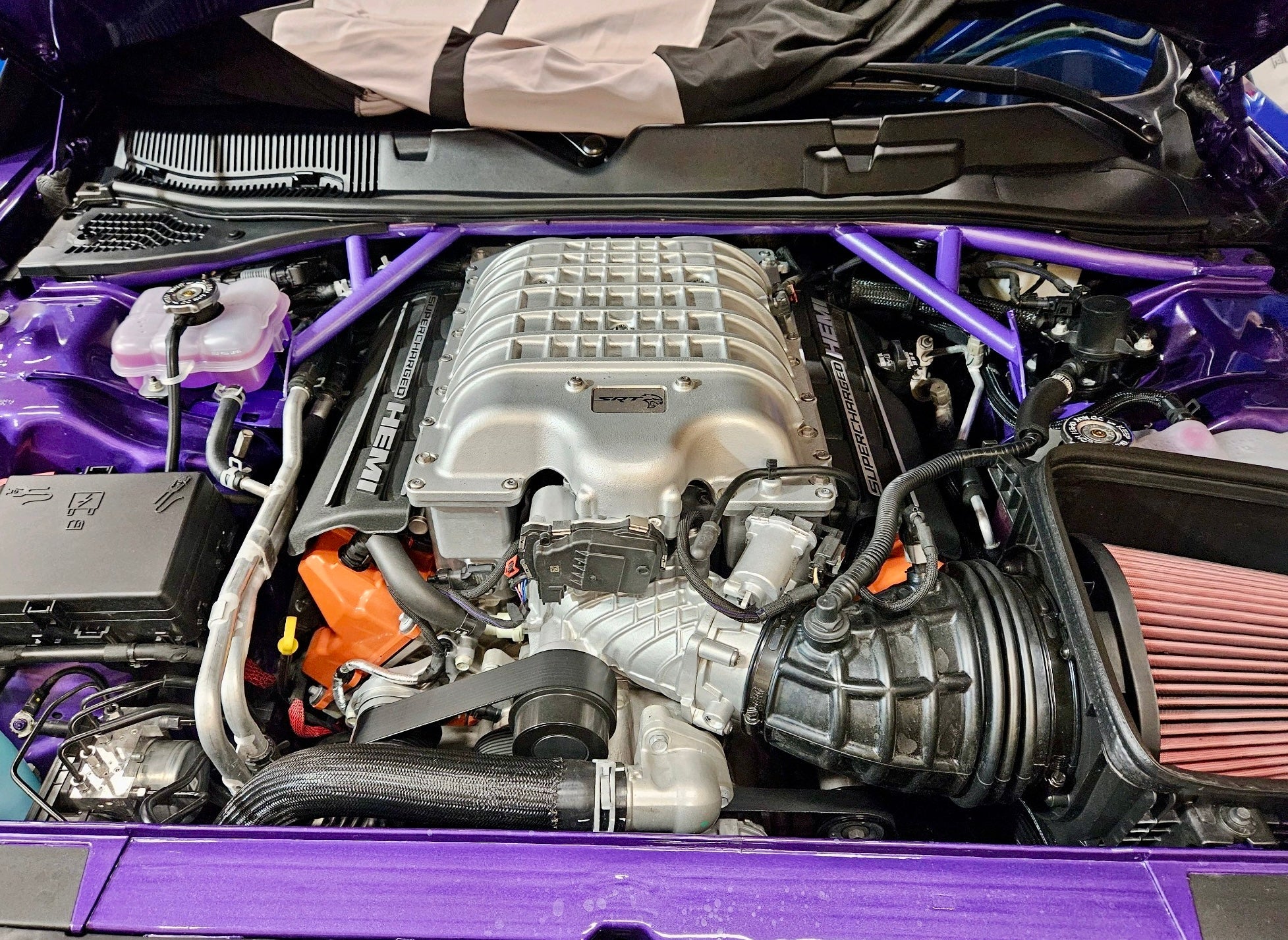
The one thing pins don't do is replace a healthy primary latch. Keep the factory hardware in good shape, check it on a regular basis, and treat pins as the backup, not the plan.
Looks, Noise and Daily Usability
Let's be honest, a lot of people buy pins because they look good. Billet pins on a Challenger hood add a deliberate, race-inspired look. That's a legitimate reason to buy them, as long as you're not expecting them to do a latch's job on their own.
Noise is the other thing to watch. A poorly fitted pin or a loose lanyard can rattle, so the kit should sit flush and the fasteners should be torqued down properly. Daily usability is mostly about convenience: a quick-release pin is easy to use every day, while a pin that needs a tool each time will get old fast.
AeroCatch Hood Latches for Dodge Challenger Owners
If you want something beyond a backup pin, a latch-style system is the other route.
Carbon Fiber and Aftermarket Hoods: Does Yours Need Pins?
This is the question that actually decides the argument. If your hood is carbon fiber or fiberglass, the answer leans toward yes, but not for the reason most people think. The issue isn't that the factory latch is bad. The issue is that a lighter panel flexes differently under load, and that flex changes how the latch and the hood interact at speed. A steel hood was designed around a particular weight and stiffness; a carbon panel wasn't, and the latch doesn't know the difference until the hood starts moving.
Here's the part that gets lost in forum threads: hood pins are a secondary retention system, not a replacement for the primary latch. The safe installation keeps the factory latch doing its job and adds pins as a backup that catches the hood if the primary latch ever lets go. On the street, the latch stays. The pins supplement it.
Model-year differences can affect fitment, so confirm the kit is listed for your car's year range before ordering. Alignment is the other risk: an aftermarket hood that doesn't sit square on the factory hinges will stress the latch no matter what backup you install, and pins won't fix a hood that's fighting the fenders. Fix the alignment first, then add retention.
Street versus track is the distinction that keeps this practical. On the street, the factory latch plus a set of pins is a sensible, low-drama setup for a lightweight hood. Most street-driven Challengers don't need to go there.
Check these before you decide:
- Hood material: steel, fiberglass, or carbon fiber
- Hood fit: does it sit square on the factory hinges and latch
- Model year: confirm the kit is listed for your car's year range
- Driving style: daily commuter or regular hard runs
- Current latch condition: is the factory hardware solid and well adjusted
If you answer "carbon hood, hard driving, and a tired factory latch," pins are a sensible, affordable backup. Keep the stock hardware in good order regardless of what you add, and remember that the latch is still the primary system.
Watch out: an aftermarket hood that doesn't line up cleanly can put stress on the latch no matter what backup you install, and drilling before you've confirmed alignment is the fastest way to turn a good hood into a bad afternoon.
Dodge Challenger Aftermarket Hood Installation Checklist
Before you start, gather your tools and set aside an afternoon. A typical pin installation looks like this:
- Confirm the kit matches your Challenger's model years (2008-2023 for the Speedlogix kit)
- Set the hood on a stable surface and check alignment with the fenders
- Mark the mounting locations carefully, using the template or plates included
- Drill only if the kit requires it, using the correct bit size
- Install the billet bezels and stainless plates, snugging the screws evenly
- Fit the pins and jam nuts, then set the lanyards with clips
- Close the hood and check for clearance, rattle, and smooth release
- Test the primary latch and secondary pins together before driving
Watch out: once you drill, there's no going back, so double-check your marks before the bit touches the hood.
Merrick Motorsports Hood Pin Options Compared
We carry three options for Challenger owners, and each suits a different build.
Speedlogix Hood Pin Kit 2008-2023 Challenger ($299.00). This is a complete bolt-on kit made from billet and stainless steel with a durable powder-coat finish. It includes mounting plates, so you're not guessing where to drill. It's built for the owner who wants a race-ready look and a serious backup for an aftermarket hood.
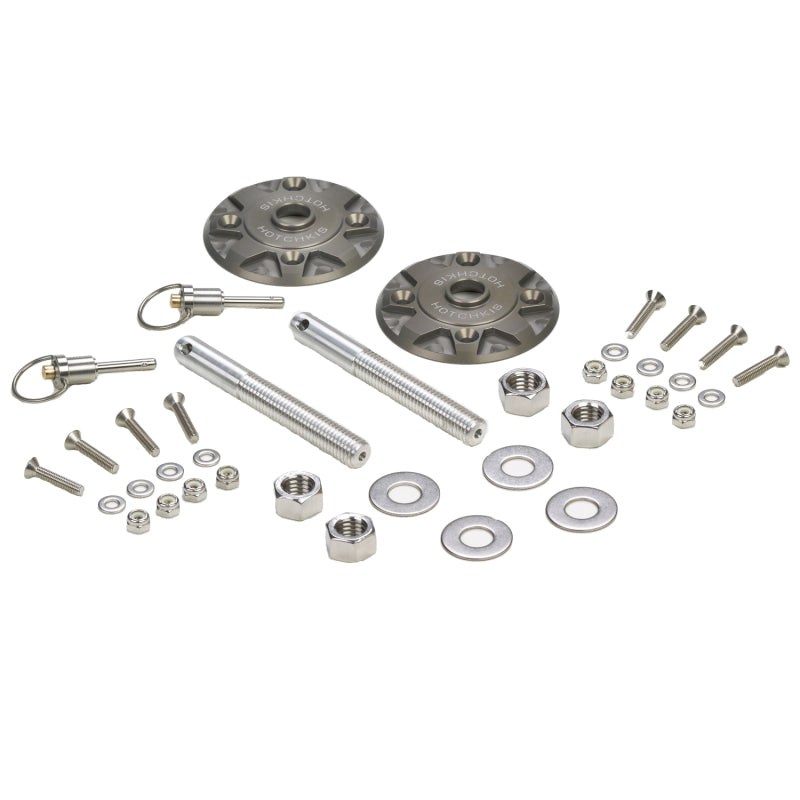
Hotchkis Universal Hood Pin Kit ($236.62). A universal quick-release billet kit with CNC-machined aluminum pins and a hard-anodized finish. It works on many vehicles, so check the fit against your specific hood before ordering, since some contoured hoods may not mount.
Mini Hood Quick Pin (Black) Pair ($49.00). A two-piece set of push-button quick-release pins with a black anodized finish. It's the most budget-friendly option here and suits owners who want a low-profile, no-tools release.
Our short advice: pick the Speedlogix kit for a full, race-inspired setup on a 2008-2023 Challenger, the Hotchkis kit if you want a universal option, and the Mini Hood Quick Pins if you want a clean, low-cost backup.
Hood pin kit prices compared
Picking Your Setup Before the Next Cruise Night
Here's how we would decide. Keep the factory latch if your hood is stock and you drive normally. Add a pin kit if your hood is aftermarket or you drive hard and want a backup. Consider a latch-style system if you run a lightweight hood and want a serious secondary hold with a visual check.
Whatever you choose, fit it properly, check it on a regular basis, and fix any alignment issues first. A good setup means you can enjoy the car on the highway and still park it at the cruise night without wondering what's rattling up front.
Ready to upgrade? Check out the Speedlogix Hood Pin Kit at Merrick Motorsports and give your Challenger a backup that looks as tough as it is.
Frequently Asked Questions
Do you need a hood latch with hood pins?
Yes, in most cases the factory hood latch stays in place and the pins act as a secondary backup. The factory latch does the primary job of holding the hood closed, and hood pins add a second point of retention so the hood is less likely to lift if the primary latch fails or the hood is aftermarket and fits loosely. Owners of a Dodge Challenger should keep the factory latch working properly and treat hood pins as an extra safety layer rather than a replacement.
Are hood pins worth it on a street-driven Dodge Challenger?
For many owners, yes, especially those running a lightweight or aftermarket hood. Hood pins are not a substitute for a properly seated factory latch, but they offer added security and visual confirmation. The Speedlogix Hood Pin Kit for 2008-2023 Challengers is a bolt-on option at $299.00, while the Mini Hood Quick Pin (Black) Pair is priced at $49.00 for a two-piece set. Whether they are worth it depends on your hood material, how you drive and how much installation work you want to do.
Can hood pins replace the factory hood latch?
Hood pins should not be used as a replacement for the factory hood latch. The factory latch remains the primary retention device, and hood pins are best treated as a secondary measure. Keep the stock latch in good working order, check that the hood closes and locks properly, and add pins only as backup security.
What is the difference between hood pins and AeroCatch latches?
Hood pins are simple pins that act as a secondary retention point on a Dodge Challenger. Latch-style systems are another option for secondary retention. Choose based on your budget, looks and how much drilling you are willing to do.
