


Dodge Challenger Hood Pins: Do You Really Need Them?
Quick Summary
Hood pins are not strictly necessary for most Dodge Challenger owners, but they add a useful backup if the factory latch wears out. Functional pins give real secondary retention, while decorative pins mainly change looks. Check the factory latch, striker, and hood alignment first, and consider pins if you run a lightweight fiberglass or carbon fiber hood or a heavily modified engine.
- Check the factory latch and hood gap before deciding on hood pins.
- Functional hood pins act as a backup, while decorative pins add little security.
- Fiberglass and carbon fiber hoods are most in need of secondary retention.
- Dry-fit every bracket and check clearance before drilling anything.
- Confirm your model year and hood type before ordering any hood pin kit.
Table of Contents
- Do You Really Need Hood Pins on a Dodge Challenger?
- How the Factory Hood Latch Holds the Hood Down
- Functional vs. Decorative Hood Pins: What Actually Changes
- Dodge Challenger Hood Pins and Hood Material: Steel, Fiberglass, or Carbon Fiber
- Dodge Challenger Hood Latch Options and Fitment Risks
- AeroCatch Hood Latches Compared With Hood Pins
- Street Use vs. Track Use: Trade-Offs for Your Setup
- Installation, Inspection, and Maintenance Checklist
- Choosing Your Next Upgrade at Merrick Motorsports
- Frequently Asked Questions
Do You Really Need Hood Pins on a Dodge Challenger?
Hood pins are the little metal latches that sit on the hood and hold it down when the factory latch isn't enough. For most Challenger owners, the honest answer is that they're a safety and style question, not a must-have. This guide from Merrick Motorsports walks through when they earn their place on your car, when they don't, and what to check before you drill a single hole.
Forum threads on this topic get heated fast. Some owners swear hood pins saved their hood at highway speed. Others point out that the factory latch has held just fine for years. Both camps have a point, and the right call depends on your hood, your driving, and how much you care about how the engine bay looks.
At Merrick Motorsports, we sell many Challenger parts, and hood pin questions come up constantly. So we've put together a straight-talking breakdown. Expect practical details, a few opinions, and a clear sense of who should buy and who should skip.
How the Factory Hood Latch Holds the Hood Down
The factory hood latch is the primary retention system. It is a spring-loaded hook on the radiator support that catches a striker on the underside of the hood. When you close the hood, the latch engages and holds the hood at the correct height.
The factory latch is designed for normal street use, and it does its job in ordinary driving. The weak point is usually not the latch itself but the way the hood sits on its hinges and the tension of the release cable. A loose striker, worn bushings, or a bent hood can all let the hood rise slightly over time.
Before deciding on hood pins, check the basics:
- Close the hood and try to lift the front edge. Little or no movement is normal.
- Look at the gap between the hood and the fenders. Uneven gaps can mean the hood is not seating properly.
- Inspect the striker and latch for wear, looseness, or corrosion.
If the factory setup is tight and even, many owners find that hood pins are an extra, not a necessity. If the hood wiggles or the latch looks tired, fix that first.
Functional vs. Decorative Hood Pins: What Actually Changes
Hood pins fall into two rough groups. Functional pins are designed to add a second point of retention, so the hood stays down even if the primary latch lets go. Decorative pins are mostly for looks, and they may sit on the hood without adding real security.
The difference matters. A pin that only looks the part will not change how the hood behaves at speed. A functional kit, properly installed, gives you a backup. That is the real safety argument for hood pins.
Here is a quick way to think about it:
| Type | Main purpose | What it changes | Best for |
|---|---|---|---|
| Functional | Secondary retention | Backup hold if the latch fails | Owners who want added peace of mind |
| Decorative | Appearance | Visual upgrade, little security gain | Show cars and styling-focused builds |
Pick based on what you want the pins to do. If the goal is safety, look for a kit that is designed to engage the hood. If the goal is looks, make sure you still have a working primary latch.
Dodge Challenger Hood Pins and Hood Material: Steel, Fiberglass, or Carbon Fiber
Hood material changes the conversation, and on a Challenger it changes the drill bits, the backing plates, and how much you sweat before the first hole. A steel factory hood is heavy and holds its shape well. Fiberglass and carbon fiber hoods are lighter, which is great for performance, but they can flex more and respond differently to drilling and bracket loads. Think of it like this: steel is the reliable old Labrador, fiberglass is the energetic puppy, and carbon fiber is the show dog that needs its beauty sleep.
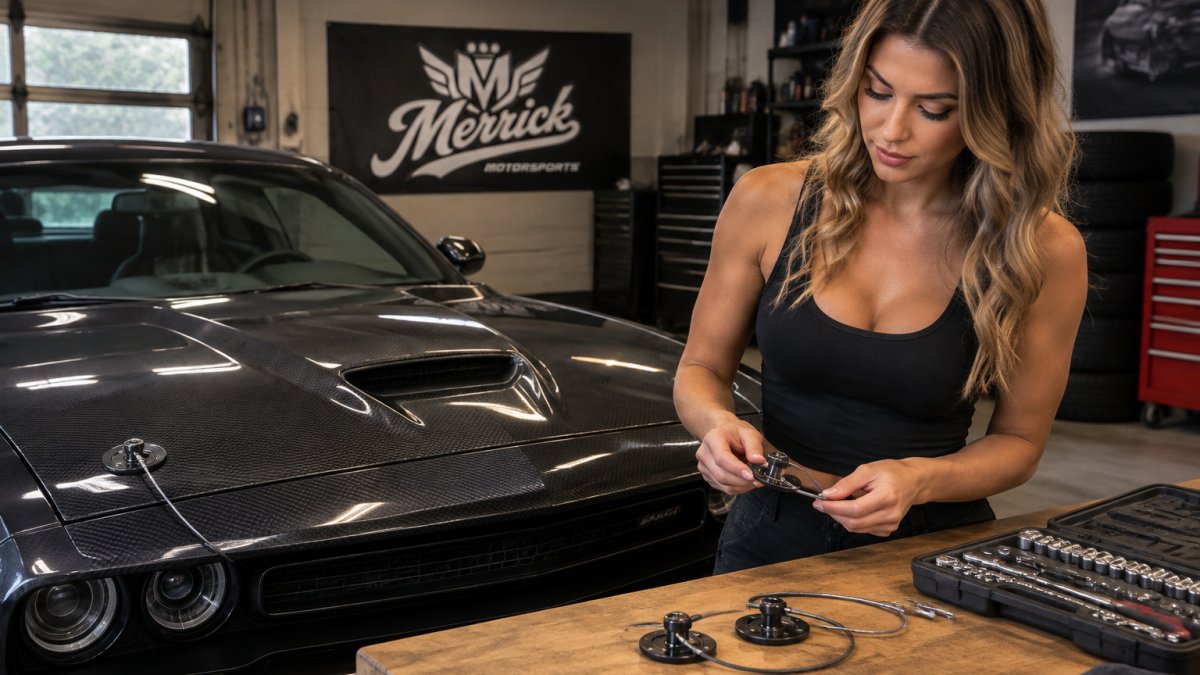
If you run a lightweight hood, the pins and brackets need to spread the load well. Poor mounting can crack or deform thinner panels. This is where quality matters. Our Carbon Fiber Aero Kits are built to exacting standards, but any hood modification still calls for careful installation.
Here's the Challenger-specific playbook by material:
- Steel hood (factory): Usually the easiest to work with. Standard hardware and a careful layout are often enough. Watch out: even steel hoods have a double-wall structure in places, so drilling blind can hit a reinforcement rib and throw off your pin alignment. Use a step drill and check underneath before you commit.
- Fiberglass hood: Check mounting points carefully. Reinforce where needed and avoid over-torquing fasteners. A common pattern is to add large fender washers or a backing plate to spread the clamp load. Watch out: fiberglass can crack if you tighten the pin nuts like you're trying to close a pickle jar, snug is enough.
- Carbon fiber hood: Most sensitive to drilling and clamping. Use the correct hardware and follow the kit instructions closely. Carbon fiber can splinter if you drill with a dull bit or too much speed. Watch out: some aftermarket carbon hoods have a clear-coat edge that chips easily, so tape the drill area with painter's tape first.
Model-year differences matter too. The Challenger has been around since 2008, and while the basic hood latch location stayed similar, the underhood packaging changed with engine options and facelifts. A kit that fits a 2015 R/T may need extra clearance on a 2021 Scat Pack with different intake plumbing. Always dry-fit and check clearance around the radiator support, cooling hoses, and wiring before you drill.
Corrosion protection is an easy detail to overlook. Any bare metal you expose by drilling, especially on a steel hood, should get a dab of touch-up paint or primer. Otherwise, a few winters of road salt will turn your precision install into a rust science experiment. For fiberglass and carbon fiber, seal the cut edge with a little resin or clear coat to keep moisture from wicking into the laminate.
Whatever material you have, measure twice and mark the layout before you drill. And if you're upgrading the whole hood setup, our Speedlogix Hood Pin Kit for 2008-2023 Challenger is a straightforward option that many owners pair with a lightweight hood.
Dodge Challenger Hood Latch Options and Fitment Risks
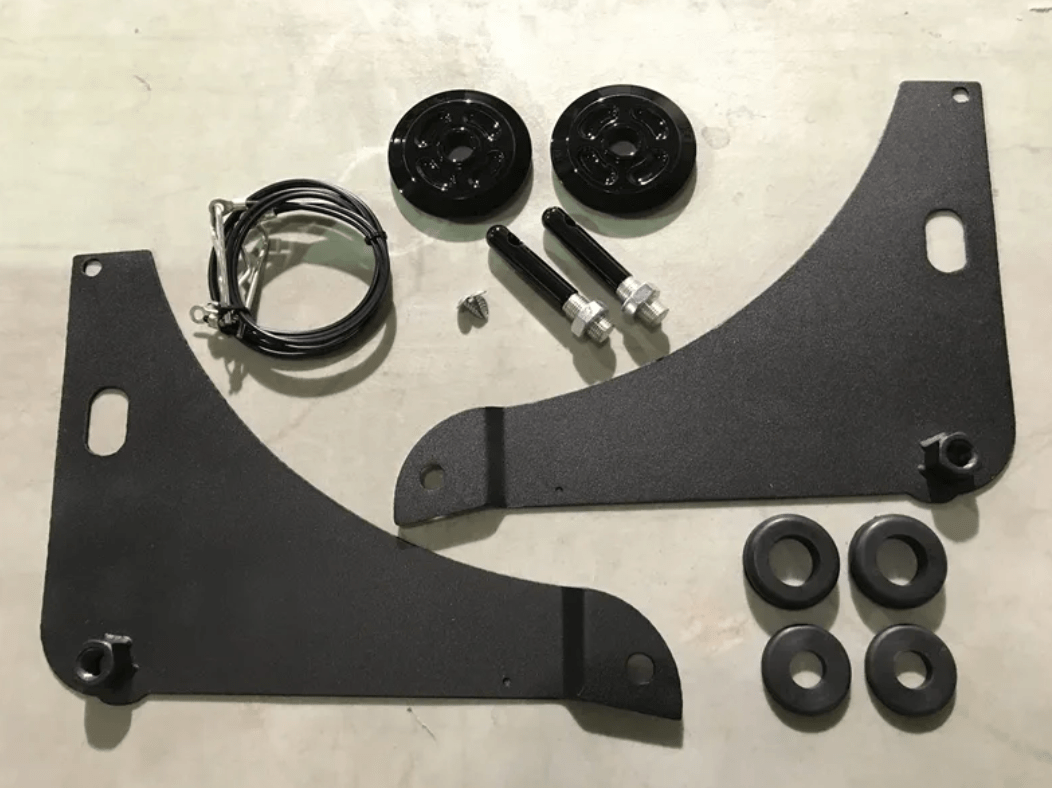
Not all hood latch kits fit every Challenger. Model year, hood type, and body modifications all affect fitment. A kit that lines up perfectly on one car may need adjustment on another.
Fitment risks to watch for:
- Wrong model year: Latch and bracket locations can vary between generations.
- Aftermarket hoods: Replacement hoods may have different hinge geometry or striker positions.
- Existing mods: Air intakes, aero pieces, and hood vents can get in the way of brackets.
- Clearance: Check that the latch clears the radiator support, cooling hoses, and wiring.
Dry-fit everything before you commit. Hold the bracket in place, close the hood, and confirm the hood sits level and the latch engages smoothly. If something doesn't line up, stop and figure out why before you drill.
Just because a part says it fits doesn't mean it fits perfectly. Confirm your year, body style, and hood type before you order.
AeroCatch Hood Latches Compared With Hood Pins
AeroCatch-style latches are a popular alternative to pins. They are designed to replace or supplement the factory latch with a flush, simplified mechanism. Many owners like the clean look and the simple, one-motion operation.
The trade-off is mainly about installation and style. A flush latch may require more modification to the hood or radiator support, and it changes how the hood closes. Pins are usually easier to add without rethinking the whole latch system.
In short:
- Hood pins: Easier to add, visible on the hood, good as a backup.
- Flush latches: Cleaner look, more involved install, changes the primary latch.
If you're comparing options, decide whether you want a backup or a replacement. That single choice narrows things down quickly.
Street Use vs. Track Use: Trade-Offs for Your Setup
Street driving and track driving put very different demands on a hood. On the street, the main concerns are wind, bumps, and the occasional car wash. On track, you add high speeds, hard braking, and sustained airflow that can lift the hood. But the real question is: what does your Challenger actually do on a Tuesday? If the answer is "commute, cars and coffee, and the occasional spirited on-ramp," your needs are different from the guy who trailers his car to the strip every weekend.
For most street-driven Challengers, the factory latch is adequate when it is in good condition. A functional pin kit adds a useful margin of safety, especially with a lightweight hood or a car that sees a lot of highway miles. Think of pins as a belt-and-suspenders approach: the factory latch is your belt, and the pins are the suspenders. You don't need them until you do, and then you're really glad they're there.
For track use, the stakes go up. Serious track builds often need a secure hood system, and the right choice depends on your hood material, your speeds, and how you run the car. If you're pushing hard, consider a functional kit or a proper latch upgrade, and make sure the whole system is inspected before each event. Track-day organizers and inspectors may look for secondary hood retention on modified cars, so check your rulebook before you show up.
Here's a street-use decision guide based on hood material and setup:
- Factory steel hood, stock latch, street-only driving: The factory latch is generally sufficient if it's in good shape. Inspect the striker, latch, and cable regularly. Pins are optional and mostly cosmetic.
- Factory steel hood, modified engine or aero: If you've added a supercharger, a different intake, or aero that changes underhood pressure, consider functional pins as cheap insurance. The factory latch wasn't designed for a significantly upgraded engine.
- Fiberglass or carbon fiber hood, street-driven: Secondary pins are strongly recommended. Lightweight hoods can flex and lift at highway speed, and the factory latch may not engage as securely on a thinner panel. This is the sweet spot for a functional pin kit.
- Track-only or competition use: Follow your sanctioning body's rules. Many require secondary retention, and some specify pin type or placement. Don't guess, read the rulebook.
Noise, weather, security, and daily usability also matter. Some pins add a little rattle if they aren't snug, and a poorly fitted kit can make the hood harder to close. Weather exposure can wear pin hardware over time, so stainless or coated hardware is worth considering. Security is a trade-off too: pins are visible and can be removed by anyone with a wrench, but they also make casual tampering more obvious. And let's be honest, if you're daily-driving a Challenger in the rain, you want a hood that seals, not one that whistles like a tea kettle at 70 mph.
A maintenance and inspection checklist for street-driven cars:
- Check latch engagement monthly: close the hood and try to lift the front edge. Little or no movement is normal.
- Inspect pin wear: look for elongated holes, worn bushings, or loose fasteners.
- Verify hood alignment: uneven gaps or a hood that sits proud of the fenders can signal a worn latch or bent hinge.
- Lubricate the latch mechanism and cable periodically with a light grease.
- After any hard bump or pothole, re-check the hood for movement.
If you're planning a broader refresh, our Dodge Challenger RGBW DRL boards for 2015 to 2024 models are a visual upgrade that many owners add alongside their other changes. And for a deeper dive into body upgrades, our guide to which Dodge Challenger body kit is worth buying walks through the options and trade-offs.
Whatever you choose, start with the basics. Confirm fitment, check the factory system, and plan your upgrades so they work together. That's how you end up with a Challenger that looks sharp and drives with confidence, and a hood that stays where you put it.
Installation, Inspection, and Maintenance Checklist
Installing hood pins is a satisfying weekend project for a DIY enthusiast. It is also easy to get wrong if you rush. Work through this list before, during, and after the job.
Before you start:
- Confirm your Challenger's model year and hood type
- Dry-fit the bracket and check clearance
- Mark the drill points and double-check alignment
- Gather the correct hardware and a torque wrench
During installation:
- Drill slowly and use a backing block on thin panels
- Install the brackets without over-tightening
- Confirm the hood closes evenly and sits level
After installation:
- Test the hood by lifting the front edge firmly
- Open and close the hood several times to check smooth operation
- Re-inspect the hardware after the first few drives and again periodically
- Check for rattles, uneven gaps, or cracks around the mounts
This is also a good moment to look over the factory latch, striker, and cable. A little maintenance now prevents a lot of hassle later.
We're also seeing more owners ask about the full setup. If you're considering a few upgrades at once, our Speedlogix Hood Pin Kit 2008 2023 Challenger is a straightforward option to look at, and the page covers what's included.
Choosing Your Next Upgrade at Merrick Motorsports
Hood pins are one piece of the Challenger puzzle. If you're planning a broader refresh, think about how each upgrade fits the others. A clean hood setup pairs well with aero and lighting changes, and it's worth planning those together.
For lighting, our Dodge Challenger RGBW DRL boards for 2015 to 2024 models are a visual upgrade that many owners add alongside their other changes. If you want to match the exterior look, carbon fiber mirror covers for Jeep Grand Cherokee and Dodge Durango are another carbon-fiber option.
Thinking about the bigger picture? Our guide to which Dodge Challenger body kit is worth buying walks through the options and trade-offs.
Whatever you choose, start with the basics. Confirm fitment, check the factory system, and plan your upgrades so they work together. That's how you end up with a Challenger that looks sharp and drives with confidence.
Frequently Asked Questions
Do you need hood pins with a factory hood latch?
Most stock Challengers run fine on the factory latch alone, since it is designed to hold the hood down on its own. Secondary retention is a backup, not a replacement. Owners who run lightweight hoods, drive hard, or want a visual confirmation that the hood is secured often add pins as an extra layer. Check that the factory latch engages fully before you decide anything else.
Are hood pins worth it on a Dodge Challenger?
They are worth it for owners who want added peace of mind on a hood that gets a lot of use, or who run a lighter aftermarket hood. For a stock steel hood driven on the street, the factory latch is usually enough. Think of hood pins as a low-cost, low-effort insurance policy, and judge the value against how you drive and what your hood is made from.
Are hood pins functional or just for looks?
Both, depending on the kit. Functional hood pins add a secondary retention point that catches the hood if the primary latch fails. Decorative pins mainly change the look of the engine bay. Before buying, confirm whether a kit is designed to bear load or is cosmetic, and install it with the correct hardware so it does real work.
What is the difference between hood pins and AeroCatch latches?
Hood pins are a simple pin-and-bracket system that works alongside the factory latch. AeroCatch latches replace the stock latch with a flush-mounted mechanism that is often used on race and track cars. Pins are usually the easier, less invasive upgrade, while an AeroCatch-style latch is a bigger change that affects the hood and mounting area.
