


Dodge Challenger Carbon Fiber Interior Guide
Table of Contents
- Understanding Carbon Fiber Interior Options for the Dodge Challenger
- Dodge Challenger Carbon Fiber Interior Trim Kit Options
- Real Carbon Fiber Interior Parts for Your Challenger
- Model-Year Fitment and Compatibility
- Dodge Challenger Interior Trim Installation Guide
- Dodge Challenger Carbon Fiber Dash Trim Selection
- Common Installation Mistakes and How to Avoid Them
- Conclusion
- Frequently Asked Questions
Last Updated: October 12, 2026
Understanding Carbon Fiber Interior Options for the Dodge Challenger
Upgrading your Dodge Challenger with carbon fiber interior components transforms your cabin. Options range from authentic weave patterns to convincing carbon-look finishes. The key is understanding what you're buying before you commit.
The appeal is obvious: carbon fiber looks aggressive and modern, but not all carbon fiber is created equal. Real carbon fiber weighs less, costs more, and requires different installation care, while carbon-look overlays offer visual punch at a fraction of the price without the weight savings or authentic weave pattern true enthusiasts seek.
Real Carbon Fiber vs. Carbon-Look Finishes
Real carbon fiber is woven fabric infused with resin and cured.
Real carbon fiber is stiffer, lighter, and more durable under UV exposure. That said, it costs considerably more, and for interior trim, weight savings are negligible compared to exterior body panels.
Hydro-dipped carbon-look trim sits in the middle: water-transfer printing applies a photorealistic carbon pattern onto a plastic base, and done well it's nearly indistinguishable from real carbon at a glance.
Molded overlays are the most affordable option: plastic pieces pre-formed to look like carbon fiber, often with a textured surface.
Available Interior Components and Trim Pieces
Your Challenger's interior offers multiple trim upgrade points: the dashboard surround, door panels, center console, steering wheel trim, and paddle shifters.
Dashboard trim typically includes the upper dash pad and lower dash panels flanking the steering column, making it the most visible upgrade and usually the first piece buyers select.
Steering wheel trim is where real carbon fiber shines.
Fitment varies by model year. A 2015 Challenger's interior architecture differs from a 2020 or 2023 model, particularly around the dashboard and center stack.
Dodge Challenger Carbon Fiber Interior Trim Kit Options
Trim kits bundle multiple pieces designed to work together visually. The better kits account for finish consistency, all matte, all gloss, or a coordinated mix, so your cabin feels intentionally designed rather than mismatched.
Most kits fall into three categories: budget-friendly carbon-look overlays, mid-range hydro-dipped sets, and premium real carbon fiber packages. Budget kits cost less; premium real carbon kits cost more upfront.
Dashboard and Dash Trim
Your dashboard is the centerpiece of any interior upgrade. A carbon fiber dash trim kit typically covers the upper pad, lower panels, and sometimes the steering column shroud.
The visual impact is substantial. A matte carbon finish on the dash signals a driver's car, not a showroom stock example.
One detail separates quality kits from cheap ones: edge finishing. Premium carbon trim has smooth, finished edges; budget overlays often have rough edges that catch light awkwardly and feel unrefined.
Door-Panel Trim and Speaker Cutouts
Door panels present a different challenge: they're larger, more visible, and take more physical contact.
Real carbon fiber door panels are expensive. Hydro-dipped alternatives hold up if the print layer is thick and properly sealed. Molded overlays are durable and affordable.
Speaker cutout surrounds are often overlooked but make a difference.
The fitment challenge here is speaker size: factory locations vary slightly between model years, so a 6.5-inch surround designed for a 2020 model might not align with a 2015's opening.
Steering-Wheel Trim and Paddle Details
The steering wheel is where real carbon fiber genuinely adds value.
Carbon fiber wheel wraps come in two styles: full wraps covering the entire wheel circumference, or partial wraps covering just the grip areas.
Paddle shifters are another popular upgrade point. Real carbon fiber paddles are lighter than factory plastic. If your Challenger has a manual transmission, paddle shifters aren't relevant, but automatic owners appreciate the added control feel.
Installation is straightforward: most wheel wraps and paddles clip or bolt onto the factory wheel structure with no electrical work.
Real Carbon Fiber Interior Parts for Your Challenger
If you've decided to go authentic, here's what separates genuine carbon fiber from everything else.
Authentic Weave Patterns and Finishes
Real carbon fiber uses actual woven fabric, not printed graphics.
Finishes for authentic carbon fiber fall into a few categories. Matte finishes are most common and most forgiving, they hide dust and fingerprints, and they photograph beautifully.
Color variations exist too. Most carbon fiber is black, but some manufacturers offer white carbon fiber (created by bleaching the resin) or even red carbon fiber.
The quality of the resin finish matters. Premium carbon fiber pieces have a smooth, glass-like finish. Budget pieces sometimes feel slightly rough or have minor imperfections in the resin surface.
Weight Reduction and Performance Benefits
Here's the honest truth about interior carbon fiber weight savings: they're minimal. A full interior trim kit, dashboard, door panels, console, wheel wrap, might save 8 to 12 pounds total.
The performance benefit is psychological rather than measurable. You won't notice 12 pounds less weight in acceleration or braking.
Where carbon fiber genuinely matters is in high-performance applications, racing, track days, or serious weight-reduction projects. But for daily driving and weekend cruising, the aesthetic upgrade is the primary value.
That said, carbon fiber components do resist vibration better than plastic.
Model-Year Fitment and Compatibility
This is where most installation problems originate. A trim kit designed for 2020+ Challengers won't fit a 2015 without modification. Period.
2015-2023 Challenger Interior Trim Compatibility
Dodge made significant interior refreshes in 2018 and again in 2020.
If you own a 2015-2017 Challenger, you need trim kits specifically designed for that generation. The same goes for 2018-2019 and 2020+.
Door panel fitment is particularly generation-specific. The speaker opening sizes, panel depth, and clip locations vary.
The safest approach: verify the exact model year and confirm the trim kit is designed for that year before ordering. Most reputable sellers will specify compatibility clearly.
Dodge Challenger Interior Trim Installation Guide
Installation difficulty depends on your mechanical skill and the specific trim pieces you're upgrading. Dashboard trim is moderate difficulty. Door panels are slightly easier. Steering wheel components are straightforward.
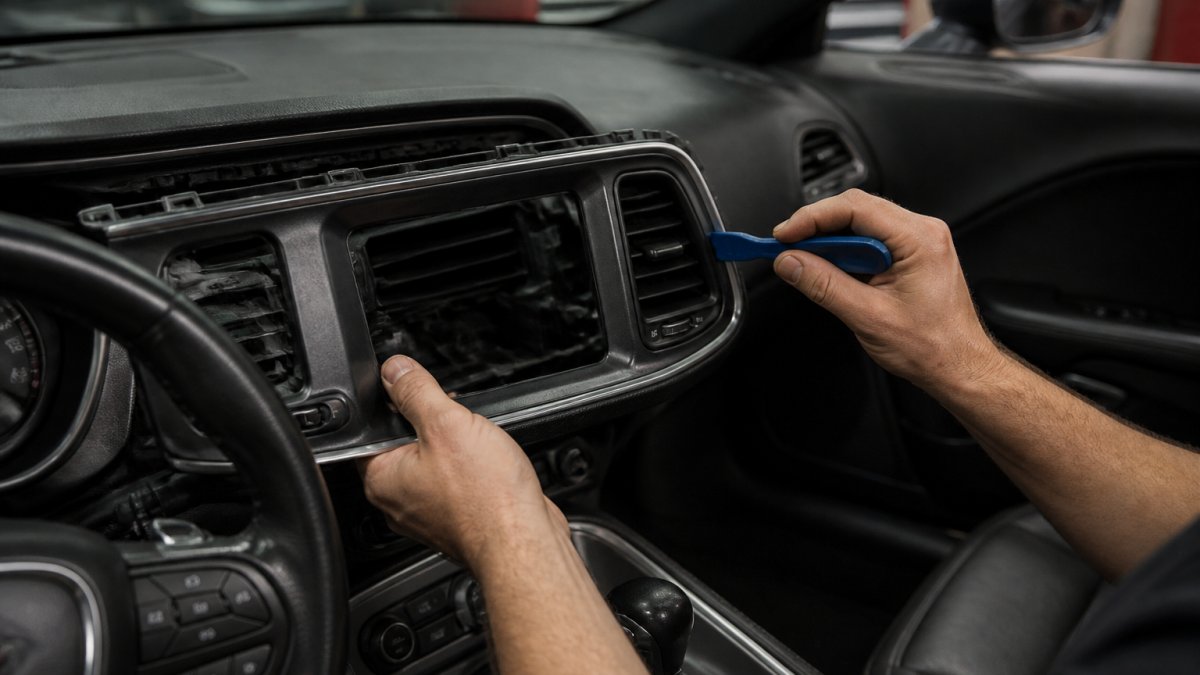
Tools and Preparation
You'll need plastic trim removal tools (sometimes called panel poppers or pry tools).
You'll also want a clean workspace, preferably indoors and well-lit. Lay out all your pieces before you start removing anything.
For dashboard work, disconnect the negative battery terminal first. This is a precaution against accidental electrical contact, though interior trim removal typically doesn't involve any electrical components.
For door panels, remove one door panel at a time. This prevents confusion and lets you reference the factory setup while you're working.
Removal Risks and Factory Panel Protection
The biggest risk during removal is breaking factory trim clips. These clips are plastic and fragile.
Use plastic pry tools and work slowly. Start at one corner and gently work your way around the perimeter. Listen for the click as clips release.
Factory panels are also vulnerable to scratches and scuffs. Place a clean cloth or towel between your pry tool and the panel surface.
If you're removing door panels, be aware that door panel clips often break during removal. Accept this as a possibility.
Take photos of the factory trim layout before removal.
Dodge Challenger Carbon Fiber Dash Trim Selection
Your dashboard is the focal point of your interior upgrade. Choosing the right finish and material sets the tone for the entire cabin aesthetic.
Matte and Gloss Finishes
Matte carbon fiber is the most popular choice for interior trim. It looks sophisticated, hides dust and fingerprints, and photographs well.
Gloss carbon fiber is more reflective and dramatic, catching light and emphasizing the weave pattern. The trade-off is that gloss finishes show every fingerprint, dust particle, and smudge.
Some manufacturers offer a semi-gloss or satin finish as a compromise. It has some reflectivity without the fingerprint visibility of full gloss.
The finish choice also affects how the trim ages. Matte finishes hold their appearance longer because imperfections are less visible.
Durability and Maintenance
Real carbon fiber is genuinely durable. It resists UV fading better than plastic overlays, and it won't peel or delaminate if it's properly sealed.
Hydro-dipped carbon-look trim is less forgiving.
Maintenance is straightforward. Dust your carbon fiber trim regularly with a microfiber cloth.
For gloss finishes, consider a light polish or wax occasionally. This maintains the shine and provides UV protection.
If your carbon fiber trim gets scuffed or scratched, you have limited repair options. Deep scratches in real carbon fiber are permanent.
Common Installation Mistakes and How to Avoid Them
Most installation problems are avoidable with preparation and patience.
Forcing pieces that don't fit. This is the number one mistake. If a trim piece doesn't slide into place smoothly, stop.
Removing fasteners in the wrong order. Some trim pieces have hidden fasteners behind other trim pieces.
Reusing factory clips. Once you've removed a factory trim panel, those plastic clips are often damaged or weakened. Consider them one-time-use items.
Skipping the test fit. Before you permanently install your new carbon fiber trim, place all pieces in their locations without fastening them.
Ignoring edge gaps. Carbon fiber trim should sit flush with factory panels.
Conclusion
Upgrading your Challenger's interior with carbon fiber trim transforms how your cabin looks and feels every time you get behind the wheel. Whether you choose authentic carbon fiber for its premium material quality or carbon-look overlays for their affordability, the key is matching the right product to your model year and managing the installation carefully. At Merrick Motorsports, we stock a comprehensive selection of carbon fiber interior components and trim kits designed specifically for 2015+ Challengers, backed by reliable shipping from multiple locations across the US.
| Upgrade Type | Best For | Durability | Cost Consideration |
|---|---|---|---|
| Real Carbon Fiber | Enthusiasts prioritizing authenticity and longevity | Excellent; resists fading and peeling | Premium investment |
| Hydro-Dipped Carbon-Look | Budget-conscious buyers wanting visual impact | Good; print layer can wear at contact points | Mid-range |
| Molded Carbon-Look Overlays | Daily drivers seeking affordability and ease | Good; durable plastic base | Most affordable |
For additional guidance on fitment and installation, consult the Dodge Challenger technical documentation and owner's manual resources. Many Challenger enthusiast communities also maintain detailed installation guides, according to automotive forum archives and community resources, step-by-step walkthroughs from experienced owners are invaluable references. Finally, the Specialty Equipment Market Association (SEMA) guidelines for aftermarket automotive parts provide industry standards for fitment and quality that reputable trim manufacturers follow.
Frequently Asked Questions
What is the difference between real carbon fiber and carbon-look interior trim for a Dodge Challenger?
Real carbon fiber interior parts feature authentic woven carbon-fiber construction, offering genuine weight reduction and a distinctive weave pattern that changes appearance depending on viewing angle. Carbon-look finishes use molded overlays or hydro-dipped materials that mimic the appearance of carbon fiber at a lower cost but provide no weight savings. Real carbon fiber delivers superior durability and authentic aesthetics, while carbon-look options suit budget-conscious owners prioritizing appearance over performance benefits.
Will a carbon fiber interior trim kit fit my 2015 Dodge Challenger?
Fitment depends on the specific trim kit and your exact model year. Most carbon fiber interior trim kits are engineered for 2015-and-newer Challenger models, but design changes between model years, particularly around 2020, mean some kits may require minor modifications. Always verify model-year compatibility with the product listing or contact Merrick Motorsports directly to confirm fitment for your specific Challenger before purchasing.
How do you install a Dodge Challenger carbon fiber interior trim kit?
Installation typically involves removing factory trim panels using plastic pry tools to avoid damage, then test-fitting the carbon fiber pieces to ensure proper alignment. Most kits use adhesive backing or clips; follow the manufacturer's instructions for application. If you're uncomfortable removing factory panels or the pieces don't fit without modification, professional installation is recommended to prevent damage.
How do you clean and maintain carbon fiber interior parts?
Clean carbon fiber with a microfiber cloth and gentle car detailing spray designed for painted surfaces. Avoid harsh chemicals, abrasive scrubbers, or high-pressure water. Matte finishes require extra care to preserve their texture; use soft cloths only. Protect your carbon fiber trim from prolonged direct sunlight to prevent UV fading. Regular light cleaning and occasional protective detailing spray will maintain the finish and extend durability significantly.