


Best Dodge Charger Lighting Upgrades: LED Headlights & More
Last Updated: October 23, 2026
Quick Summary
The best Charger lighting upgrades start with SPDZ1 Hellfire LED Headlights for a full front-end makeover, then Flow Series or RGBWA DRL boards for color, and LED side markers for a fast, cheap win. Match your model year before ordering, and aim every beam low.
- SPDZ1 Hellfire LED Headlights fit every 2015-2024 Charger trim from SXT to Hellcat and install in 1-2 hours.
- Flow Series DRL Boards run over 120 animated modes and take 3-5 hours because the housings must open.
- RGBWA DRL Boards add a dedicated 6000K white chip so your white setting looks clean, not blue.
- LED side markers are plug-and-play into the factory socket and take 15-30 minutes with no splicing.
- Aim lights about 25 feet from a wall so the top of the beam sits slightly below the headlight marks.
Table of Contents
- Why Your Charger's Factory Lights Need a Serious Upgrade
- Quick Comparison: Best Charger Lighting Upgrades at a Glance
- 1. SPDZ1 Hellfire LED Headlights: The Full Front-End Makeover
- 2. Flow Series DRL Boards: Color-Chasing Attitude for Your Charger
- 3. RGBWA DRL Boards: Pure White Meets Wild Color
- 4. LED Side Markers: Small Part, Big Style Gain
- Dodge Charger Headlight Bulb Upgrade: What Actually Fits
- Dodge Charger Fog Light Upgrade: See the Road, Not the Fog
- Dodge Charger Headlight Installation: Tools, Time, and Dad Jokes
- Dodge Charger Headlight Beam Pattern: Aim It Right, Don't Be That Guy
- Frequently Asked Questions
Why Your Charger's Factory Lights Need a Serious Upgrade
Factory lighting is the one part of a Charger that never got the memo about attitude. Your 2015 through 2024 sitting in the driveway? It's still working with whatever the bean counters approved a decade ago.
At Merrick Motorsports, we sell a lot of lighting, and the same conversation comes up every week: a guy pulls up in a clean Charger, kills the ignition, and the lights fade out looking like two tired flashlights. That's the moment the hunt for the best Dodge Charger lighting upgrades begins.
Below, we'll walk through the four upgrades that change the most about how your car looks and sees the road, then cover fitment, fog lights, installation, and beam aim. Keep reading, because the beam pattern section is the one that keeps you out of trouble with oncoming traffic and the guy behind you with brights on. Proper beam alignment remains the foundation for any effective modification, serving as a critical prerequisite for those exploring custom lighting upgrades to ensure their vehicle maintains a sophisticated aesthetic while adhering to road safety standards.
Quick Comparison: Best Charger Lighting Upgrades at a Glance
Here's the short version for the guy who reads the manual only after something breaks.
| Upgrade | Price | Install Time | Skill Level | Best For |
|---|---|---|---|---|
| SPDZ1 Hellfire LED Headlights | $899.99 | 1-2 hours | Beginner | Full front-end transformation |
| Flow Series DRL Boards | $300.00 | 3-5 hours | Intermediate | Color-chasing show presence |
| RGBWA DRL Boards | $250.00 | 1-4 hours | Intermediate | Pure white plus color on demand |
| LED Side Markers | $59.98-$92.46 | 15-30 minutes | Beginner | Cheap, fast style gain |
The pattern is simple: the more work you're willing to do, the more dramatic the result. Side markers are a Saturday morning job. DRL boards are a Saturday job that turns into a Sunday job once you realize the headlight has to come apart.

1. SPDZ1 Hellfire LED Headlights: The Full Front-End Makeover
The SPDZ1 Hellfire Projector LED Headlights are the single biggest visual change you can make to a 2015-2024 Charger, and they're built as a direct fit for every trim from SXT to Hellcat. High-output LED projectors throw a sharp, focused beam, while switchback DRLs run white and flip to amber when you signal. The sequential turn signals add that flowing animation that makes the car look a generation newer than it is.
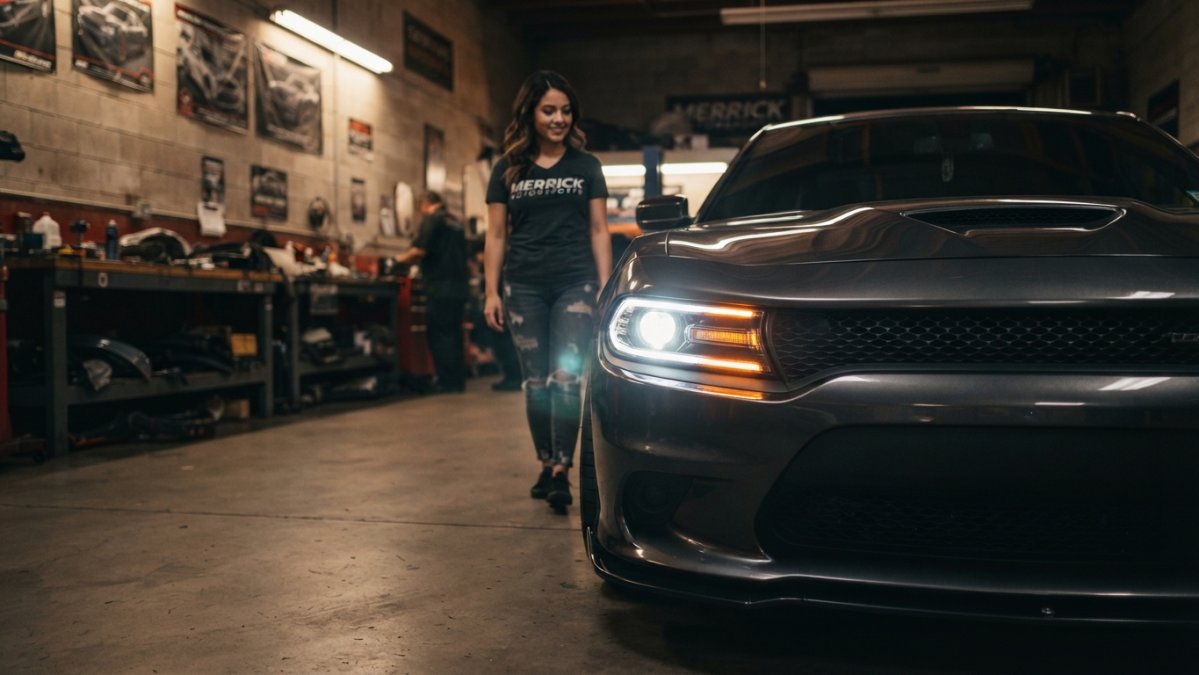
Construction matters here. Impact-resistant lenses and weather-sealed housings keep moisture and UV damage out, which is the failure point on cheap aftermarket housings. Plug-and-play OEM connectors mean no cutting and no splicing.
Grab the SPDZ1 Hellfire LED Headlights if you want the whole front end done in one box.
2. Flow Series DRL Boards: Color-Chasing Attitude for Your Charger
Flow Series DRL Boards replace the plain white daytime running light strip inside your factory headlights with individually addressable LEDs running over 120 animated modes. Color-chasing, sequencing, smooth fades, millions of colors, all controlled from a Bluetooth app or the included handheld remote. This is the upgrade for the guy who wants his Charger to look like it's doing a light show at a red light.

Fitment covers 2015-2024 across all trims, and the kit includes four boards, the hybrid controller, a wiring guide, and T-taps for turn signal sync. Expect 3-5 hours of work because the headlight housings have to come open.
Order the Flow Series DRL Boards for maximum chaos, or the diffused 2.0 version if you want a smoother, hotspot-free glow with a slimmer strip profile.
3. RGBWA DRL Boards: Pure White Meets Wild Color
RGBWA DRL Boards are the thinking man's color upgrade. Standard RGB boards can't produce a clean white, so your "white" setting looks slightly blue or purple. The RGBWA board adds a dedicated 6000K white chip, so you get a crisp factory-style look when you want it and full color when you don't. Integrated amber turn signal switching is built in, and it reverts to your chosen color after signaling.

At $250, it's an excellent way to get custom DRLs without replacing the whole headlight assembly. The kit includes six circuit boards, a hybrid Bluetooth module, and a remote.
One fitment note that trips people up: 2019 and newer Chargers use only one active DRL board from the factory, so you'll use one board instead of the full set. The 2015-2018 cars use all three. Check your model year before you start pulling things apart.
Pick up the RGBWA DRL Boards for the best balance of clean white and full color.
4. LED Side Markers: Small Part, Big Style Gain
LED side markers are the cheapest upgrade on this list and the one most owners skip. Factory incandescent side markers look dated, and they're dim enough that they barely register at night. A set of LED markers fixes both problems in under half an hour.
You've got options. The Clear White LED Side Markers Set at $59.98 gives you a clean OEM-plus look with brighter white output. The Smoke White LED Side Markers at the same price add a stealth smoked lens that looks blacked out until you hit the lights. If you want full color control, the RGB Smoke LED Side Markers and RGB Clear LED Side Markers run $92.46 for the four-piece set.
All of them are plug-and-play into the factory bulb socket. No cutting, no splicing, no resistors. Pop the old marker out, plug the new one in, snap it home.
SPDZ1 2015–2024 Dodge Charger Hellfire LED Headlights w/ Switchback DRL & Amber →
Dodge Charger Headlight Bulb Upgrade: What Actually Fits
The honest answer on a Dodge Charger headlight bulb upgrade is that it depends entirely on which housing your car left the factory with. Older trims and lower packages ran reflector housings with halogen bulbs. Higher trims and later years moved to projector housings, and those two setups do not accept the same bulb or produce the same beam.
Here's the practical breakdown:
- Reflector housings with factory halogen: a drop-in LED bulb can work, but the reflector was designed around a halogen filament. Light scatter is common, and glare to oncoming traffic is a real risk.
- Projector housings: these are built to focus light through a lens, so a quality LED or HID system behaves far better and produces a tighter beam pattern.
- Full assembly replacement: the cleanest path. You replace the housing and the light source together, so fitment and beam pattern are engineered as one unit rather than guessed at.
That's the argument for the Hellfire assemblies above: they solve the housing and the light source in one move. For owners who want to understand what the government expects from aftermarket lighting, the NHTSA lighting equipment regulations lay out the federal standards for replacement lighting equipment.
Dodge Charger Fog Light Upgrade: See the Road, Not the Fog
A Dodge Charger fog light upgrade is about widening the low, close-in light that fills the gap between your bumper and where your headlights actually land. Factory fog housings on most Chargers are small and dim, and they do very little in real weather. If your fog lights are still running the original incandescent bulbs, you're basically driving with two candle-powered nightlights taped to your bumper.
The biggest mistake we see is treating fog lights as a brightness contest. Brighter isn't better in fog. Light that scatters back at you makes visibility worse, not better. What you want is a low, wide beam that stays under the fog layer and lights the edges of the road where deer and debris actually live.
Here's what actually fits and works on a Charger:
- 2015-2024 Charger fog light bulb types: Most trims use an H8 or H11 halogen bulb from the factory, depending on the package. The SXT and GT often run H8, while higher trims and later years may use H11 or an LED-specific housing. Check your owner's manual or pop the bulb out before ordering.
- LED fog light bulbs: A quality LED fog bulb in the correct size will give you a whiter, brighter light with less heat and longer life. Look for bulbs with a compact heat sink that fits inside the housing.
- Full fog light assembly upgrades: If you want the cleanest beam pattern and a modern look, replacing the whole fog light housing with an LED projector assembly is the way to go. These are engineered as a unit, so the beam is focused and the fitment is plug-and-play.
- Fog light halos: If you're already running Flow Series or RGBWA DRL boards, adding matching fog light halos ties the whole front end together. No more mismatched white and amber, your Charger will look like it left the factory with a lighting package, not a parts bin raid.
Match color temperature across your fog and head lights so the front end doesn't look like a mismatched parts bin. A 6000K white fog light paired with a 6000K headlight looks intentional; a 6000K fog light next to a yellowish halogen headlight looks like a mismatched project.
For a direct fit, check out our Dodge Charger LED Fog Light Bulbs and Fog Light Halo Kits to complete the front-end look.
Dodge Charger Headlight Installation: Tools, Time, and Dad Jokes
Dodge Charger headlight installation splits into two very different jobs. Full assembly swaps are a bolt-on affair: pull the bumper trim, unbolt the old housing, unplug the harness, and reverse the process with the new unit. The Hellfire assemblies are plug-and-play with OEM connectors, so a first-timer with basic hand tools can finish in an afternoon.
DRL board installs are a different animal. You're opening the headlight housing, which means heat, cutting, and patience. Budget 3-5 hours and have these on the bench:
- Basic socket and screwdriver set
- Heat gun or oven for softening the housing seal
- Dremel or oscillating tool
- T-taps for turn signal wiring
- Nitrile gloves so you don't grease up the new lenses
- Painter's tape to protect the housing edges
- A second pair of hands and a patient spouse or buddy
Every install takes longer than you planned and may involve a trip to the hardware store for a tool you need. Plan for it, and don't rush the seal when you close the housing back up.
Dodge Charger Headlight Beam Pattern: Aim It Right, Don't Be That Guy
Dodge Charger headlight beam pattern is the part of the upgrade nobody talks about, and it's the part that decides whether you're a considerate driver or the guy everyone flashes their brights at. A proper beam pattern puts light on the road ahead, cuts off sharply below the horizon, and throws a little extra to the right shoulder for signs and pedestrians.
Here's the thing most people miss: beam pattern isn't just about aiming. It's about the housing and the bulb working together. A reflector housing designed for a halogen filament has a specific focal point, and when you drop in an LED bulb that doesn't match that focal point, the light scatters. You get a fuzzy wash of light going everywhere, including into oncoming traffic. That's why cheap LED drop-ins get a bad reputation, and it's why we recommend full projector assemblies when you want real light output without the glare.
Year-by-year fitment matters more than you think. A 2015 Charger SXT with factory halogen reflectors is a completely different animal from a 2021 Charger R/T with projector housings. The reflector housing needs a bulb that mimics the stock filament position; the projector housing is more forgiving but still needs a quality LED or HID system to produce a tight beam. If you're not sure what you have, pop the hood and look at the back of the headlight, projector housings have a round lens you can see through the front, while reflector housings have a textured chrome bowl.
Aim it right the first time. Park on a flat surface about 25 feet from a wall, with the car sitting normally loaded (not with a trunk full of concrete bags). Mark the center of each headlight on the wall with painter's tape, then adjust so the top of the beam sits slightly below those marks. The cutoff should be crisp, not a fuzzy wash of light going everywhere. If you're running the SPDZ1 Hellfire assemblies, they come pre-aimed from the factory, but it's still worth checking after installation, bumps and settling can throw them off.
Legality and glare prevention. Federal standards for replacement lighting equipment are set by the NHTSA lighting equipment regulations, and they cover things like beam pattern, glare, and color. Most states also have their own rules about aftermarket lighting, some are stricter than others about color temperature, tint, and whether you can run LED bulbs in halogen housings. Check your state highway safety office before you commit to a color or tint. The Insurance Institute for Highway Safety headlight ratings explain how beam pattern and glare are evaluated on new vehicles, which is a useful benchmark for what good lighting actually looks like.
Frequently Asked Questions
Why are Dodge Charger headlights so dim?
Most base Charger trims ship with factory halogen bulbs, which put out far less light than modern LED setups. Over time the lenses also haze and the bulbs dim with age, so night driving feels like holding a candle. Swapping to an LED headlight assembly or a proper bulb upgrade restores brightness and gives you a sharper, more focused beam pattern.
Are LED headlight bulbs a good upgrade for a Dodge Charger?
Yes, if you pick a kit built for your model year. A Dodge Charger headlight bulb upgrade adds brightness and a whiter color temperature, but cheap universal kits can flicker or throw error codes. Look for plug-and-play connectors and vehicle-specific fitment, like the SPDZ1 Hellfire LED Headlights for 2015-2024 models, which run $899.99 and need no splicing.
Do Dodge Charger LED upgrades require wiring or adapters?
Most quality kits are plug-and-play and use your factory harness. The SPDZ1 Hellfire headlights connect with OEM connectors, and the LED side markers plug straight into the factory bulb socket. DRL board kits include waterproof harnesses and T-taps for turn signal sync. If a kit needs cutting or splicing, that is a red flag worth checking before you buy.
How do you aim upgraded headlights to avoid blinding other drivers?
Park on level ground about 25 feet from a wall, mark the center of each headlight on the wall, and adjust the beam so the cutoff sits slightly below those marks. A clean beam pattern with a sharp cutoff keeps light on the road instead of in oncoming windshields. Recheck the aim after any headlight installation, and never run a kit that scatters light upward.
