


Benefits of American Made Performance Parts for Muscle Cars
Quick Summary
American made performance parts can offer clearer accountability, a shorter path to warranty help, and domestic validation testing, but origin alone does not guarantee more horsepower or better handling. Check fitment for your exact vehicle, read the warranty and return terms, verify the Made in USA claim, and compare total delivered cost.
- Made in USA does not guarantee better performance; the spec sheet and build quality matter more.
- Check fitment by year, make, model and submodel before buying any part.
- Ask sellers for dyno sheets, install guides and test data, not just marketing copy.
- Compare total cost of ownership, including shipping, install time, returns and warranty coverage.
- Verify a Made in USA claim with specific origin details, consistent packaging and clear warranty terms.
Table of Contents
- Why American Made Performance Parts Are Worth a Closer Look
- How American-Made Aftermarket Parts Affect Quality and Durability
- Performance and Safety: What Domestic Manufacturing Can and Cannot Promise
- Fitment Matters: Choosing Parts for Your Dodge Charger
- Upgrades That Matter for Muscle Cars
- How to Verify a Made in USA Claim on Car Parts
- Total Cost, Warranty and Returns: Looking Beyond the Sticker Price
- Shipping Speed and Support When Things Go Sideways
- Pick Your Next Upgrade and Get It Bolted On
- Frequently Asked Questions
Benefits of American Made Performance Parts for Muscle Cars
Last Updated: November 7, 2026
Why American Made Performance Parts Are Worth a Closer Look
Here at Merrick Motorsports, we spend our days around Chargers, Challengers, Mustangs and a few trucks that have seen better days, so we know a thing or two about what bolts on cleanly and what ends up in the scrap bin. Plenty of folks shopping for aftermarket parts want to know one thing first: does "American made" actually mean anything? Good news: it can, and we will walk you through where it matters and where it doesn't.
The aftermarket is busy, and that makes it harder to tell the real deals from the hype. That's why we like to start with the facts we can verify.
So what are the actual benefits of American made performance parts for muscle cars? We'll cover the big ones here: quality and durability, safety, fitment, cost, shipping and support. Grab a cold drink and let's get into it.
How American-Made Aftermarket Parts Affect Quality and Durability
Quality is where most people's eyes glaze over, so let's make it concrete. A part made domestically doesn't automatically last longer. What it does give you is a clearer paper trail: a known manufacturer, a known location, and usually a shorter route for warranty or defect questions to reach someone who can actually fix them.
Materials and machining are where quality really shows up. A billet aluminum pad or a TIG-welded control arm either fits and holds up or it doesn't, and you can usually spot the difference in the finish and tolerances on the bench before you ever turn a wrench. National Association of Manufacturers' Facts About Manufacturing (2026) gives the broader picture of how much domestic manufacturing still drives the U.S. economy, which is why many of us still care where parts come from.
Here's the shop-floor advice: check the warranty terms and the materials list before you buy.
Performance and Safety: What Domestic Manufacturing Can and Cannot Promise
Let's be straight about this one. Made-in-USA does not guarantee more horsepower or better handling. Your car doesn't care about a flag on the box. What matters is whether the part meets the design spec, is built to good tolerances, and is installed correctly. But here's where domestic manufacturing can actually earn its keep: accountability and testability.
When a part is designed, machined, and assembled domestically, the manufacturer can run real-world validation, dyno pulls, track sessions, durability cycles, and stand behind the results. That's not a guarantee of performance, but it's a paper trail you can ask for. A reputable maker should be willing to share dyno sheets, install guides, and failure-mode data if you ask.
Take headers as an example. The right set of headers for your engine can change how power is delivered, but only if the primary tube length, collector design, and flange thickness match your build. The origin label doesn't tell you that, the spec sheet does.
Safety is the same deal. Parts that affect braking, steering, or suspension need to be built to proper engineering standards no matter where they're made. NHTSA's Federal Motor Vehicle Safety Standards overview explains the minimum safety-performance requirements that apply to motor vehicles and certain equipment, and origin alone never proves compliance. What domestic manufacturing can offer is a shorter feedback loop: if a batch has a problem, the fix doesn't have to cross an ocean.
Watch out: a common trap is assuming a part is track-tested just because it's American-made. Ask for the test data, not the marketing copy. If the seller can't tell you what vehicle, what mods, and what conditions the part was validated on, treat the performance claims as unproven.
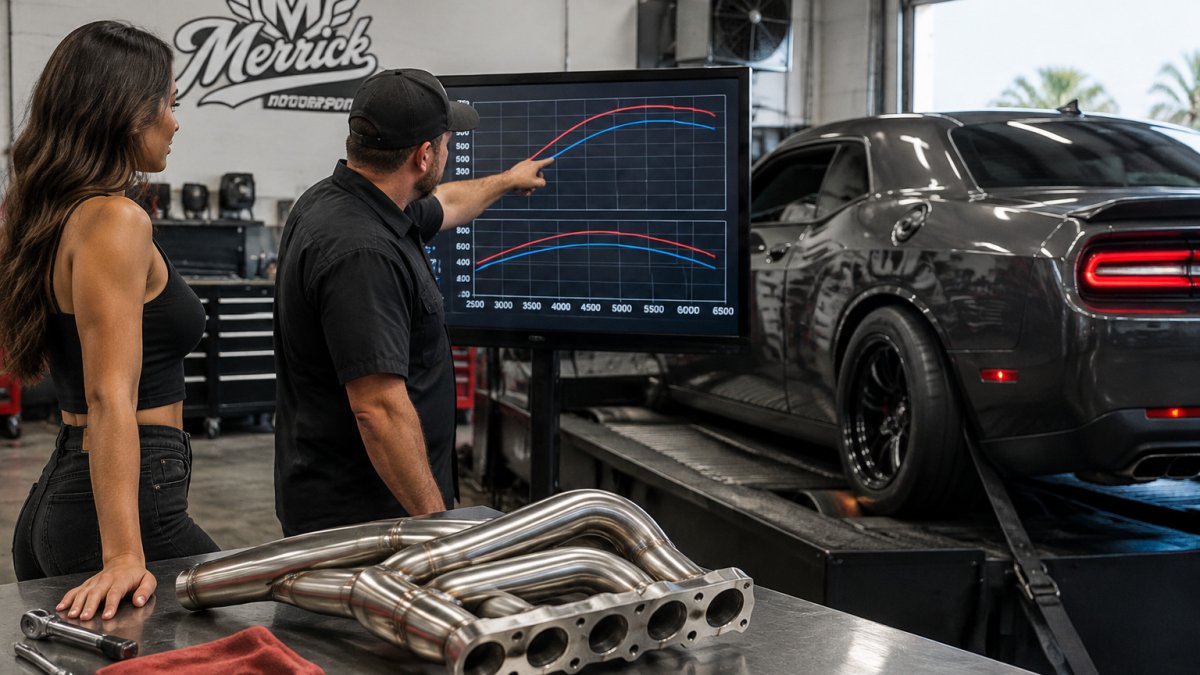
So what can domestic manufacturing promise? Accountability and a shorter path to answers. What it cannot promise is that every American-made part is the best performer on the market. Shop on specs and reputation, then let the origin be a bonus.
Fitment Matters: Choosing Parts for Your Dodge Charger
Nothing kills a Saturday faster than a part that "should fit" and doesn't. We hear this all the time from Charger and Challenger owners, and we get it. Fitment is the first thing to nail down.
Start with the year, make, model and submodel. A 2015 Challenger and a 2011 Charger may share a few parts, but plenty don't cross over. Our rule is simple: read the fitment chart, compare it against your exact vehicle, and ask the seller if anything is unclear before you click buy.
Some parts still require minor adjustments, like a bit of trimming or hardware swapping. Be honest with yourself about your skill level, and if a part needs more than a basic install, budget for a shop visit. A quick phone call to the seller can save you a lot of frustration.
Upgrades That Matter for Muscle Cars
Now for the fun part. Muscle cars reward smart upgrades, and handling is often the best place to start. If your Charger feels like a boat in the corners, adjustable front sway bar end links are a practical, bolt-on way to sharpen up the front end. Pair them with the right suspension setup and you'll notice the difference on your favorite back road.

Other upgrades that pay off:
- Lift points: Billet lift pads make tire changes and maintenance easier in the garage.
Our advice: prioritize the upgrade that solves your biggest complaint. Don't bolt on everything at once and wonder which change did what.
How to Verify a Made in USA Claim on Car Parts
Here's where a little skepticism pays off. The Federal Trade Commission says it can bring enforcement actions against false or misleading claims that a product is of U.S. origin, so sellers are supposed to back up what they say. FTC guidance on complying with the Made in USA Standard is worth a read if you want to know what a legitimate claim looks like.
Our checklist for verifying a claim:
- Look for specific language, such as which parts are made in the U.S. and where.
- Check the product page and packaging for consistent origin details.
- Read the warranty and return terms, since reputable sellers stand behind them.
- Compare the specs against the vehicle fitment, not just the origin label.
If a seller can't tell you where a part is made, that's your answer.
Total Cost, Warranty and Returns: Looking Beyond the Sticker Price
The cheapest part isn't always the cheapest choice. A part that fails early, doesn't fit, or needs a second order costs you time and money. Think in terms of total cost of ownership: purchase price, shipping, install time, warranty coverage, and what happens if it goes wrong. That's the math that actually matters over the life of your build.
Here's a simple framework. Start with the delivered price, part plus shipping. Then add the cost of a failed install or a return (your time, return shipping, restocking fees). Then factor in how long the part is expected to last and what a replacement would cost. A part that costs a little more up front but carries a lifetime warranty and ships from a domestic warehouse can easily win on total cost over five years.
Our pricing reflects the materials, machining, and support behind each part. For example, the BMR lowering springs for the S197 Mustang GT come in at $298.83 and carry a lifetime warranty against spring sag. The Stainless Works Silverado headers run $2,525.85 and come with a lifetime warranty on materials and craftsmanship. Those numbers are the real comparison to make, not just the sticker price on a different site.
Warranty and returns are where domestic makers often separate themselves. A lifetime warranty on materials and craftsmanship, like the one backing our Stainless Works headers, tells you the manufacturer expects the part to last. But read the fine print: what's covered, what voids it, and who pays return shipping.
Watch out: a low sticker price can hide high shipping, restocking fees, or a warranty that requires you to ship the part back overseas at your own cost. Add those up before you click buy.
So when you compare parts, compare the whole package: delivered price, warranty terms, return policy, and support access. That's the number that matters when the dust settles.
Shipping Speed and Support When Things Go Sideways
Waiting months for parts is nobody's idea of fun, so ask where a seller ships from and how they handle problems. Merrick Motorsports ships from six locations across the U.S.
Support matters just as much when a fitment question or install hiccup pops up. Before you order, check what the seller's return policy covers and how to reach them. If you're not a full-time mechanic, that support is worth more than a few dollars saved.
Pick Your Next Upgrade and Get It Bolted On
Here's the bottom line: American made performance parts can offer solid quality, clear accountability and a smoother ownership experience, but the origin label is just one piece of the puzzle. Check fitment, read the warranty, verify the claim and compare total cost.
Ready to shop? Check out the Mustang 05-25 Stealth Lift Pads, machined from American billet aluminum, or browse our full lineup. Get your next upgrade bolted on and enjoy the drive.

Frequently Asked Questions
Is made in the USA better quality?
Not automatically. Made in USA means a product's final substantial transformation happened domestically, and the Federal Trade Commission enforces that claim. Origin tells you where a part was made, not how well it was engineered or tested. Look for documented materials, tolerances, warranty terms and reviews from owners of your exact model. Use origin as one filter among several, and compare the specific part you need rather than trusting the label alone.
Are American-made performance parts better quality?
The research available does not prove that American-made performance parts are universally more reliable or higher performing than imported alternatives. Domestic production can offer shorter lead times and tighter quality control, but those are advantages you should verify for each product. Check for stated material specs, testing details and a warranty. A well-documented import can beat a poorly documented domestic part, so judge each product on its evidence.
How can you tell if an automotive part is made in the United States?
Start with the manufacturer's listing and packaging, which should state origin clearly. Under FTC guidance, a Made in USA claim should reflect that all or virtually all of the product is domestic. Be cautious of vague wording like 'American engineered' or 'assembled in USA,' which may not mean the same thing. Ask the seller where the part is manufactured and what share of the components are domestic before you buy.
