


Aftermarket Car Parts Return Policy: What You Need to Know
Table of Contents
- Understanding Aftermarket Car Parts Return Policy Basics
- Return Eligibility and Qualifying Conditions
- Return Time Limits and Deadlines
- The Step-by-Step Process for Returning Car Parts Online
- Handling Wrong Auto Parts Return Situations
- Car Parts Return Shipping: Costs and Responsibility
- Auto Parts Refund Processing Time and Payment Methods
- Non-Returnable Items and Exceptions
- Damaged, Defective, or Missing Items
- Fitment and Compatibility Mistakes: Prevention and Solutions
- Frequently Asked Questions
Last Updated: October 21, 2026
Understanding Aftermarket Car Parts Return Policy Basics
Your new carbon fiber splitter arrived. You tear open the box. Then reality hits: it doesn't quite fit, or maybe you ordered the wrong year fitment. Now what?
This is where knowing your aftermarket car parts return policy becomes your best friend. Unlike factory dealerships that have one standard return process, aftermarket retailers, including Merrick Motorsports, each set their own rules. Some are generous. Some are strict. Most fall somewhere in between, depending on the condition of the part and how long you've had it.
The key difference is understanding what "returnable" actually means. A return policy isn't just about getting your money back. It's about what condition the part must be in, how long you have to request it, what documentation you need, and whether you're getting cash, store credit, or a replacement. Get these details wrong, and you could be stuck with a $400 part you can't use.
This guide walks you through exactly how aftermarket car parts return processes work, what disqualifies a part, and how to avoid the common mistakes that turn a simple return into a headache.
Return Eligibility and Qualifying Conditions
Not every part qualifies for a return. That's the first rule. Most retailers, and Merrick Motorsports included, set specific conditions that must be met before they'll even consider processing your request.
Unused and Uninstalled Requirements
The baseline requirement: the part must be unused and uninstalled. This means no bolt holes drilled, no paint applied, no fitment modifications. If you've touched it with tools, it's no longer returnable in most cases.
Why? Because an installed or modified part has zero resale value. A retailer can't restock it or sell it as new. The moment you drill a hole or sand an edge, the part becomes yours permanently, at least from the retailer's perspective.
The catch: "unused" doesn't always mean "never opened." Many retailers allow returns on unopened, uninstalled parts. But some require the part to be in the exact condition it arrived. Check your specific retailer's policy before assuming you can open the box and still get a refund if your mind changes.
Original Packaging and Accessories
Here's where people get tripped up. Most aftermarket car parts return policies require the part to come back in its original packaging. Not similar packaging. Not a box that's "close enough." The original box.
Why? Because original packaging protects the part during return shipment. A carbon fiber hood bouncing around in a generic box gets damaged. Damaged goods can't be restocked. So retailers protect themselves by requiring the original packaging.
Include everything that came with it too. If your LED headlight kit arrived with a wiring harness, installation guide, and hardware pack, all of that needs to come back. Missing accessories often disqualify a return or trigger a restocking fee.
Return Time Limits and Deadlines
Time is your enemy here. Most retailers give you a window, typically 30 days from purchase or delivery, to request a return. Miss that window, and you're done.
The clock usually starts on your delivery date, not your purchase date. If you ordered a part on January 1st but it arrived on January 15th, your 30-day window starts on the 15th. Some retailers are generous and count from purchase. Others are strict. Know which applies to your order.
Why the deadline? Retailers need to know what's coming back so they can restock it, test it, and resell it. A part sitting in your garage for six months has lost value. The retailer can't predict that return, so they cut off the window.
Pro tip: Request your return authorization before the deadline, not after. Some retailers require the authorization request within the return window, even if you have extra time to actually ship the part back. Merrick Motorsports and most reputable retailers give you reasonable time to ship once authorization is granted, but get that request in early.
The Step-by-Step Process for Returning Car Parts Online
Here's the deal, gearhead: a return is a process, not a single phone call. Treat it like a mini build. Skip a step, and you're the guy with a boxed-up splitter in the corner of the garage and a customer-service email chain longer than a Camaro's option list.
Step 1: Verify Eligibility Before You Touch a Wrench
Before you box anything, confirm three things: the part is unused and uninstalled, you're inside the return window, and the item isn't on the non-returnable list. If you've already bolted it on, stop here. Installed parts are almost universally excluded, and no amount of sweet-talking changes that.
Step 2: Request Your Return Authorization (RMA)
Do not ship first. Contact customer service and request a return merchandise authorization number. Have your order number, the part number, and a short reason ready. Ask three questions in the same email or call:
- What is the return shipping address?
- Am I getting a refund, replacement, or store credit?
- Are there restocking fees or deductions I should expect?
Write down the RMA number and screenshot the confirmation. That number is your proof you started the return inside the window, even if the box sits in your garage for a few extra days.
Step 3: Document the Part's Condition
Take photos before packing. Shoot the part, the label with the part number, the original packaging, and any included hardware. If there's any pre-existing damage or a shipping dent, photograph it now. This is your evidence if the return is later disputed.
Step 4: Pack It Like You Mean It
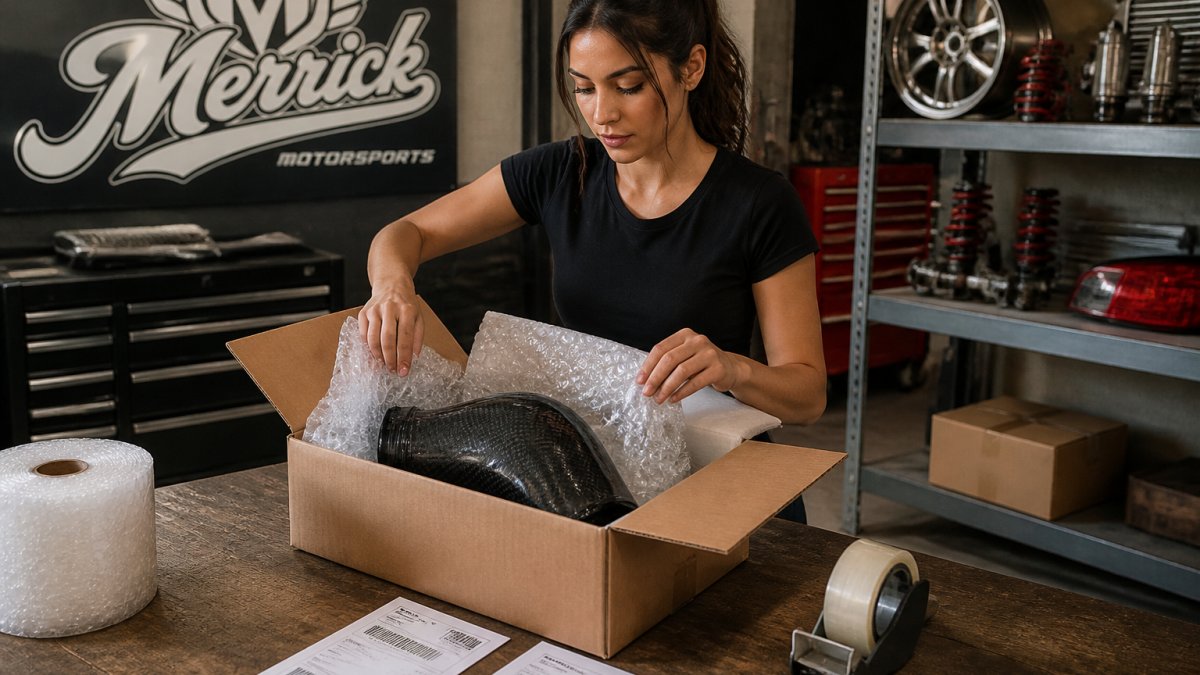
Use the original packaging when the policy requires it. Reinstall all accessories, brackets, hardware, and documentation. Pad the box so the part can't shift. A carbon fiber piece rattling around in a loose box arrives cracked, and a cracked return gets rejected. Tape the RMA number visibly on the outside.
Step 5: Ship With Tracking and Keep the Receipt
Use a trackable carrier and keep the receipt. For higher-value parts, add insurance. Save the tracking number until the refund posts. If the package disappears, tracking and the receipt are the only things standing between you and a very expensive lesson.
Step 6: Track the Refund to Completion
Once the carrier shows delivery, give the retailer time to inspect and process. Follow up if you haven't heard back within the stated processing window. Keep every email and screenshot in one folder until the credit hits your account.
carrier tracking and shipping insurance basics
Handling Wrong Auto Parts Return Situations
You ordered a 2015 Challenger part. The box arrives. You check the fitment. It's for a 2016. Now you're stuck with the wrong part.
This is frustrating but usually returnable, if you catch it quickly and haven't installed it. Wrong auto parts return situations are among the most common returns, and most retailers handle them smoothly because the mistake is on them, not you.
Contact customer service immediately. Provide photos showing the part number on the box versus your order. Most retailers will authorize a return and either ship the correct part or process a refund. Some will even cover return shipping for wrong items since it's their error.
The key: don't install it first. Once it's installed, you've modified it. Even if it's the wrong fitment, the retailer can claim you damaged it trying to make it fit. Get authorization before you touch your tools.
Car Parts Return Shipping: Costs and Responsibility
Nobody likes paying to send back a part they already paid to receive. But return shipping is where policies differ the most, and where a little homework saves real money. Think of it like torque specs: guess, and something strips.
Who Pays, and Why It Depends on the Reason
The general pattern across aftermarket sellers:
- Seller error (wrong part shipped, defective, damaged in transit): the seller typically covers return shipping or provides a prepaid label.
- Buyer error (ordered wrong fitment, changed mind, no longer needed): the buyer typically pays return shipping.
- Remorse returns inside a free-return window: some sellers cover it, many don't.
Read the policy before you buy, not after. The answer is usually on the product page or in the returns section, and it changes how a return pencils out.
The Cost Categories to Check Before You Order
Return shipping isn't one number. Look for these line items in any policy:
- Return shipping cost: flat rate, actual carrier cost, or prepaid label.
- Restocking fee: a percentage or flat deduction on some categories, often higher on special-order or opened items.
- Deductions for missing accessories or damaged packaging.
- Original shipping charges: some sellers refund them, many don't.
- Core charges: separate from returns, but easy to confuse with a deduction.
How to Check a Policy in Under Two Minutes
Open the product page, find the returns or shipping section, and scan for four phrases: return window, who pays return shipping, restocking fee, and non-returnable. If any of those are missing, message the seller before ordering. A quick question now beats a dispute later.
Shipping Smart: Carriers, Tracking, and Insurance
Use a trackable carrier and keep the receipt. For higher-value parts, add insurance. Don't cheap out on ground shipping for something fragile or expensive. A few dollars of insurance protects you if the package is lost or damaged in transit, and tracking is your proof the return arrived.
The Fitment Factor
Fitment mistakes are the most common reason for returns, and they're also where cost responsibility gets fuzzy. If the listing clearly matched your vehicle and the part still didn't fit, that's often treated as a seller or product issue. If you ordered without checking year, make, model, and trim, that's usually on you. Document the listing details and your vehicle info so the conversation starts from facts, not vibes.
shipping insurance and tracking basics
Auto Parts Refund Processing Time and Payment Methods
You shipped the part back. Now the waiting begins.
Most retailers take 5-10 business days to receive your return, inspect it, and process the refund. During inspection, they check that the part is unused, undamaged, and in original packaging. If everything checks out, the refund processes.
Refund timing depends on your payment method:
- Credit card: 3-5 business days after approval
- Debit card: 5-10 business days
- PayPal or digital wallet: 1-3 business days
- Store credit: immediate
That's from the retailer's end. Your bank may take additional time to post the credit. So a refund approved on Monday might not hit your account until Thursday or Friday.
Some retailers offer store credit as an alternative to refunds. This usually processes faster (sometimes instantly) and may include a bonus credit as an incentive. If you plan to buy from them again, store credit is often the better move.
Non-Returnable Items and Exceptions
Not everything can be returned. Retailers exclude certain items for safety, legal, or practical reasons.
Installed Parts and Core Returns
Once a part is installed, it's yours. No returns. This includes parts that have been bolted on, glued, welded, or otherwise attached to your vehicle.
Why? Because an installed part is now part of your vehicle. The retailer can't resell it. They can't verify it wasn't damaged during installation. Liability becomes an issue too. So the moment you drill a hole or tighten a bolt, the return window closes.
Core returns are different. Some parts, like alternators, starters, or brake calipers, have a "core" value. You can return the old part you replaced, and the retailer credits you. This is common for mechanical components but rare for cosmetic or bolt-on performance parts. Check if your part has a core value before assuming it doesn't.
Electrical and Hazardous Items
Electrical components, LED kits, wiring harnesses, control modules, often have restrictions. Once they're opened and tested, they can't be returned. Why? Because electrical parts can't be safely restocked without full testing. A returned LED kit might have a hidden short or damaged circuit. Reselling it could create a fire hazard or cause a customer's vehicle to fail.
Hazardous items like fuel additives, certain coatings, or flammable products have legal restrictions. Once opened, they can't be returned due to safety and environmental regulations. Check before you buy if the product is classified as hazardous.
Damaged, Defective, or Missing Items
You opened the box and found a cracked part. Or a piece was missing. Or it arrived damaged from shipping. This is different from a return you're initiating. This is a claim against the retailer or shipper.
Contact customer service immediately with photos. Don't install the part. Document everything: the damage, the packaging condition, the shipping box condition. Take clear photos from multiple angles.
Most retailers will authorize a replacement or refund for damaged goods. Some may ask you to return it so they can file a claim with the shipper. Either way, damaged items are almost always covered.
Missing items are usually covered too. If your LED kit arrived without the wiring harness, the retailer will ship the missing piece or refund you. Again, contact them quickly with proof (photos, order confirmation, etc.).
Fitment and Compatibility Mistakes: Prevention and Solutions
The number one reason people return parts? Wrong fitment. You thought it would fit your 2015 Challenger. Turns out it's for 2016+. Or the universal fit hood doesn't quite line up with your specific model.
Prevention starts before you buy. Check the product listing for fitment details. Does it list your year, make, and model? Does it say "universal fit" or "model-specific"? Read the reviews, real customers mention fitment issues if they exist. When in doubt, message the retailer and ask before ordering.
If you order wrong, contact the retailer quickly. Most will process an exchange (ship the correct part) without requiring you to return the wrong one first. Some will charge a restocking fee. Some won't. It depends on their policy and how quickly you catch the mistake.
The solution: if fitment is wrong and you haven't installed it, request an exchange. Exchanges are usually faster than returns because the retailer can ship your correct part while processing your return. You get the right part sooner, and the retailer gets the wrong part back.
Returning an aftermarket part doesn't have to be a nightmare. Know the policy before you buy. Keep your packaging. Request authorization before shipping. And if something goes wrong, contact customer service early, most issues resolve faster when you reach out quickly.
At Merrick Motorsports, we make returns straightforward because we know you're investing in your vehicle. Whether you need a replacement, an exchange, or a refund, we handle it with the same care you put into your build. Check out our full inventory of Challenger, Charger, RAM, and Corvette parts, and shop with confidence knowing our aftermarket car parts return policy has your back.
Frequently Asked Questions
What should I check in an aftermarket car parts return policy before ordering?
Before hitting buy, verify the return window (most sellers offer 14-30 days from delivery), whether unused condition is required, if original packaging must be intact, and who covers return shipping. Check if the seller distinguishes between refunds and store credit, some only offer credit. Confirm fitment guarantees for your specific vehicle year and model. Look for clarity on restocking fees and whether installed or custom parts are returnable. A solid return policy should be easy to find on the website, not buried in fine print.
Can you return aftermarket car parts after opening the package?
Most aftermarket sellers require parts to be unopened and in original packaging for a full refund, but policies vary. If you've opened the package but haven't installed anything, contact customer service immediately, some retailers will still accept the return with a small restocking fee. Once a part is installed on your vehicle, return eligibility drops significantly. Always review the specific return policy before purchasing, as some sellers are stricter than others about opened boxes.
What should I do if an aftermarket part arrives damaged or incorrect?
Document everything with photos showing the damage or packaging condition immediately upon delivery. Contact customer service with your order number and photos, don't wait. Most sellers will replace damaged items or send the correct part at no cost and often cover return shipping for their error. Keep the original packaging and damaged part until the replacement arrives. For incorrect items, get a return authorization number before shipping anything back. Most sellers process replacements within 5-10 business days once they receive and inspect the defective part.
How long does auto parts refund processing time typically take after I ship the part back?
After the seller receives your return, expect 5-10 business days for inspection and processing. Once approved, refunds typically appear in your account within 3-5 business days, depending on your payment method. Credit card refunds may take up to two billing cycles to show. If you used a debit card or bank transfer, processing can take slightly longer. Always track your return shipment and keep your receipt, if a refund doesn't appear within 15 days of the seller receiving your package, follow up with customer service and provide tracking proof.