


2015 Dodge Challenger Bumper: Replacement Guide 2026
Quick Summary
A 2015 Dodge Challenger bumper replacement starts with confirming fitment against your trim, since adaptive cruise, Hellcat and Demon models, and sensor setups all change which parts bolt up. Then choose OEM or a well-made aftermarket cover, remove the old one carefully, and dry-fit the new piece before tightening any fasteners.
- Check your VIN or trim badge before buying, since trim and sensors decide what fits.
- Adaptive cruise models use a different license plate bracket than RT, SXT, Scat Pack, and SRT trims.
- Hellcat and Demon models use a different front bumper, so standard covers may not fit.
- Bag and label hardware by location during removal, since bolt lengths can differ.
- Inspect brackets and reinforcement for hidden damage before installing the new cover.
Table of Contents
- Why Your 2015 Dodge Challenger Bumper Deserves Attention
- Checking Fitment Before You Buy a 2015 Dodge Challenger Bumper
- 2015 Dodge Challenger OEM Bumper vs. Aftermarket: What Actually Matters
- 2015 Dodge Challenger SXT Front Bumper Options and Styling Upgrades
- Tools and Parts Checklist for a Dodge Challenger Front Bumper Kit
- Step-by-Step: Removing the Front Bumper on a 2015 Dodge Challenger
- Installing Your 2015 Dodge Challenger Bumper Replacement
- Common Mistakes That Turn a Weekend Job Into a Month-Long Project
- Your Next Move: Get Your Challenger's Front End Dialed In
- Frequently Asked Questions
Why Your 2015 Dodge Challenger Bumper Deserves Attention
Let's be honest, a 2015 Dodge Challenger wears its front end like a badge of honor. The bumper is the first thing people see when you roll up to a car meet, and it's the first thing that takes a beating when a parking lot gets a little too friendly. Whether you're swapping a cracked cover or chasing a cleaner, meaner look, your bumper matters. This guide walks you through the whole job, from fitment to finishing touches.
Here's the short version: check fitment first, pick the right parts for your trim, and take your time during removal. Skip any of those steps and a weekend project turns into a month of frustration.
- Front bumper damage is usually the first thing you'll notice after a fender bender or a bad pothole.
- Aftermarket options can change the look without changing the core structure.
- A little prep work saves a lot of headaches.
Grab a cold drink, pop the hood, and let's get your Challenger's front end dialed in.
Checking Fitment Before You Buy a 2015 Dodge Challenger Bumper
Fitment is where most bumper projects go sideways. Plenty of parts say they're direct bolt-ons, but a listing is not a guarantee. Trim, sensors, and whether your car has adaptive cruise all change what will bolt up cleanly.
Start with your VIN or the trim badge on your car. Then compare that against the product listing before you click buy.
- Adaptive cruise: Many 2015 models have it, and the license plate bracket changes with it.
- Hellcat and Demon: These use a different front bumper, so don't assume a standard cover will fit.
- Sensors and brackets: Confirm which mounting points and sensor holes your car has.
Our tip: if something looks even slightly off in the photos, ask before you order. A ten-minute question beats a return shipment any day.
2015 Dodge Challenger OEM Bumper vs. Aftermarket: What Actually Matters
This is the part where every forum thread turns into a cage match. OEM versus aftermarket is not a religion, it's a trade-off, and the right answer depends on what you want the car to do. Here's the neutral breakdown nobody puts in one place. That trade-off matters most when fit, finish, and repair quality are on the line, so weigh the bumper choice alongside the standards you expect from Innovation Auto Body Mechanics & Tires.
Fit and finish. OEM covers are molded to factory tolerances, so panel gaps, clip locations, and sensor cutouts line up like they did on the assembly line. A good aftermarket cover can match that, but quality varies by maker. The difference often shows up at the edges: the gap between the cover and the fender, the way the grille sits, and whether the sensor holes are centered.
Material and construction. Factory covers are generally built to flex and absorb a parking-lot love tap. Aftermarket covers can be made from a range of materials, so check what the cover is made of before you buy. Ask what the cover is made of before you buy, because "direct fit" says nothing about the plastic.
Hardware and brackets. OEM parts usually include or specify the correct clips, brackets, and mounting points. Aftermarket kits sometimes reuse factory hardware and sometimes ship their own. A common pattern is that the cover fits but the included fasteners are the weak link, so confirm what's in the box.
Cost and installation complexity. OEM tends to cost more up front but installs with fewer surprises. Aftermarket can save money but may need trimming, drilling, or bracket tweaking. That's fine if you own a cutoff tool and a Saturday; less fine if you're paying a shop by the hour.
Sensors and adaptive cruise. This is where cheap covers bite. If your 2015 has adaptive cruise or parking sensors, the cover needs the right cutouts and mounting points. A cover without them means either no sensors or a creative solution you didn't budget for.
Conversion and styling kits. Hellcat-style and SRT-style conversions are their own category. They change the look, but they can also change what brackets, grilles, and extensions you need. Treat a conversion kit as a system, not a single part.
The neutral verdict. If you want an exact factory replacement with zero drama, OEM or a close-match aftermarket cover is the safe bet. If you want a sportier look or a cost-friendly fix and you're comfortable with minor fitting, a well-made aftermarket piece earns its keep. Either way, verify fitment against your trim and sensor setup before you click buy.
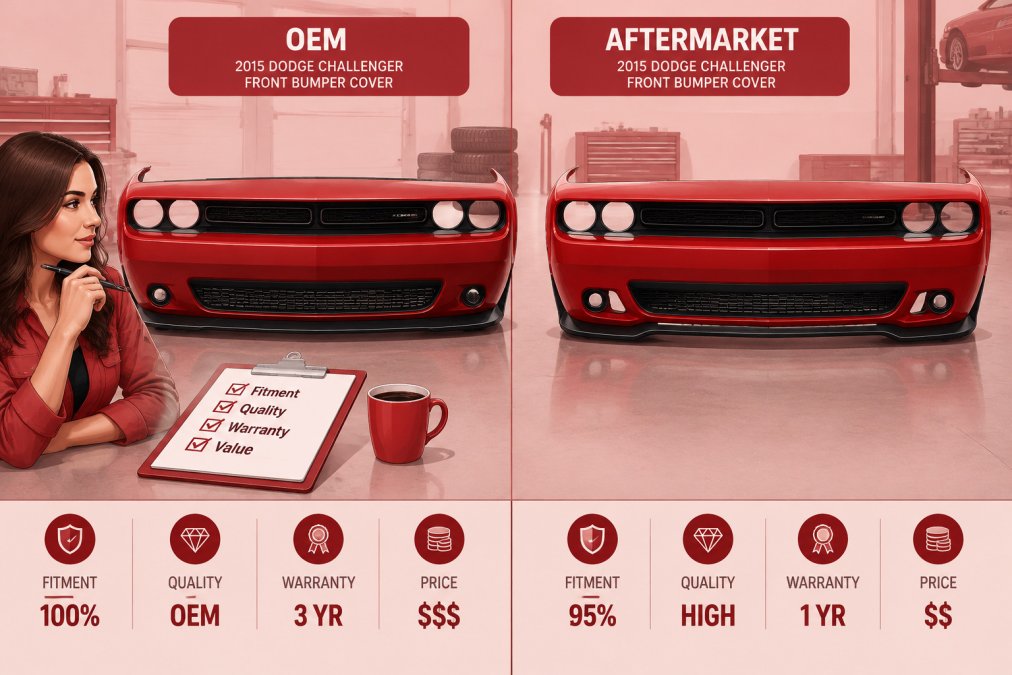
Watch out: check the sensor and grille cutouts against your actual car, not the listing photo.
2015 Dodge Challenger SXT Front Bumper Options and Styling Upgrades
The SXT is a great base to build on. A few styling upgrades can change the whole personality of the car without a full rebuild.
- Blackout accents: Matte or gloss black trim pulls the front end together.
- Front bumper kits: Full kits can add a more aggressive stance.
- License plate solutions: A clean bracket keeps the look tidy.
Keep your budget and your daily driving in mind. A bold look is fun, but you want something you'll still like after a year of road salt and rain.
Tools and Parts Checklist for a Dodge Challenger Front Bumper Kit
Nothing kills a garage Saturday like a missing clip. Lay everything out on a clean towel first, then work the checklist. This is the consolidated list most catalog pages never give you, so you can avoid the second trip to the parts store.
Tools
- Socket set and ratchet, plus extensions for the lower fasteners
- Torx and trim tool set for clips and liners
- Blue painter's tape to protect paint at the edges
- Shop towels and a parts tray or zip bags for hardware
- Jack and jack stands, or ramps, on level ground
- Work light, because half these fasteners hide in shadow
Parts and hardware
- Replacement bumper cover or fascia
- Bumper beam and reinforcement, if damaged or upgrading
- Mounting brackets and retainers specific to your trim
- Fasteners and clips, including the ones that always break
- Grille pieces and inserts that tie into the cover
- Bumper extensions and lower trim, if your build uses them
- Sensor mounts and harness connectors, if equipped
- License plate bracket, correct version for adaptive cruise or not
Upgrade parts
- Lightweight bumper support, if you're trimming weight
- Bumper blackouts or styling accents to finish the look
If you're building a full kit, the Speedlogix Lightweight Front Bumper Support 2015-2023 Challenger/Charger Hellcat is designed for that exact generation. It's made to bolt up to the factory mounting locations, though the listing notes it's for off-road use only and may need drilling on some vehicles. Check that note before you order.
Speedlogix Lightweight Front Bumper Support 2015-2023 Challenger/Charger Hellcat
Watch out: bag and label hardware by location as you remove it, because the bolts along the top edge and the ones in the wheel wells are not always the same length.
Step-by-Step: Removing the Front Bumper on a 2015 Dodge Challenger
Take your time here. Rushing is how clips snap and paint gets scratched.
- Park on level ground, disconnect the battery, and lift the front end safely onto jack stands.
- Remove the fasteners along the top edge and wheel well liners.
- Unclip the side and lower fasteners, working gently to avoid cracking the cover.
- Disconnect any sensor or harness connectors before pulling the bumper forward.
- Set the old cover aside on a soft surface, and bag your hardware so nothing gets lost.
Sensors, Clips and Hidden Damage to Inspect
Once the cover is off, look for cracked brackets, bent reinforcement, and loose sensor mounts. Hidden damage is common after a hard hit, and it's much cheaper to catch it now than after the new cover is on.
Installing Your 2015 Dodge Challenger Bumper Replacement
Install in the reverse order of removal, but dry-fit the new piece before you tighten anything. Start every fastener by hand so the threads don't cross.
If you're adding a license plate bracket, the front bracket is a common add-on. The quick-release bracket for cars with adaptive cruise is listed here, and it comes with all installation parts, though you'll need tools and it requires two underside holes:
Quick-Release Front License Plate Bracket 2015-2023 Dodge Challenger WITH adaptive cruise (SNS1a)

Cars without adaptive cruise, including RT, SXT, Scat Pack, and SRT trims, use a different version of the bracket: Quick-Release License Plate Bracket for RT, SXT, Scat Pack and SRT trims.

Why do bolt-on parts so often need a little extra work? Part of the answer is in our guide on why bolt-on parts often need modification to fit. It's worth a read before you start cutting.
Common Mistakes That Turn a Weekend Job Into a Month-Long Project
We've heard these stories more than once, and they're easy to avoid.
- Skipping fitment checks: Always confirm trim and sensor setup first.
- Forcing parts: If it doesn't line up, stop and check the fit.
- Overtightening fasteners: Plastic and bracket threads can strip easily.
- Ignoring hidden damage: Inspect the reinforcement before you install.
Nobody likes a surprise after the car is back together. Slow down, test-fit, and you'll be proud of the result.
Most bumper jobs go wrong in the same few predictable ways, so here is a quick reference to keep you out of trouble.
| Mistake | Why it hurts | Fix |
|---|---|---|
| Skipping fitment checks | Trim and sensor setup decide what bolts up | Confirm trim and sensor setup first |
| Forcing parts | Misaligned covers crack or stay crooked | Stop and recheck the fit |
| Overtightening fasteners | Plastic and bracket threads strip easily | Hand-start every fastener |
| Ignoring hidden damage | Bent reinforcement shows up after reassembly | Inspect the reinforcement before installing |
Your Next Move: Get Your Challenger's Front End Dialed In
A clean front end makes the whole car look sharper, and a careful install makes it last. Start with the right fitment, take your time on removal, and double-check every bracket before you tighten it down. Your Challenger has plenty of attitude already, so let the bumper back it up.
Ready to shop the parts that fit your build? Browse the Merrick Motorsports catalog and find the bumper blackouts, license plate brackets, and lightweight support your Challenger needs.
Browse 2015-2023 Dodge Challenger Bumper Blackouts Front and Rear

Frequently Asked Questions
How much does it cost to replace a Dodge Challenger front bumper?
Costs vary widely depending on whether you buy an OEM part, an aftermarket cover or a complete kit. Merrick Motorsports sells several front-end pieces for the 2015-2023 Challenger, including the Speedlogix Lightweight Front Bumper Support for Hellcat models at $448.60. Before you buy, confirm your trim and whether your car has adaptive cruise, because that changes which parts fit. Labor is the other variable: a shop install will cost more than a weekend job in your own garage, so price both before you commit.
Will a 2015 Dodge Challenger bumper fit other model years?
Sometimes, but do not assume it will. Front-end sheet metal and bumper supports often change between model years, and Hellcat, SRT and standard bodies can differ in mounting points and sensor provisions. The safest approach is to match the part to your exact year, trim and equipment list, then check the fitment notes on the listing before ordering. If a listing says it fits 2015-2023 but the note mentions a specific trim, follow the trim note.
What is the difference between an OEM and aftermarket Challenger bumper?
An OEM bumper is made to the factory's original specifications, so fitment is usually predictable but the part often costs more. Aftermarket bumpers can offer a different look or a lighter weight, but quality and fit vary by manufacturer. Look at materials, construction, mounting-hole alignment and the warranty. A cheaper part that needs drilling or trimming can cost you more time than the savings are worth.
Can I upgrade a 2015 Dodge Challenger SXT to an SRT-style front bumper?
It is possible, but it is more than a bolt-on swap. You will need to confirm which fascia, lower valance and support parts your SXT already has, and whether your car has the sensors and brackets the new piece expects. Plan the job as a front-end conversion rather than a simple cover change, and check that the kit includes every mounting part you will need.
